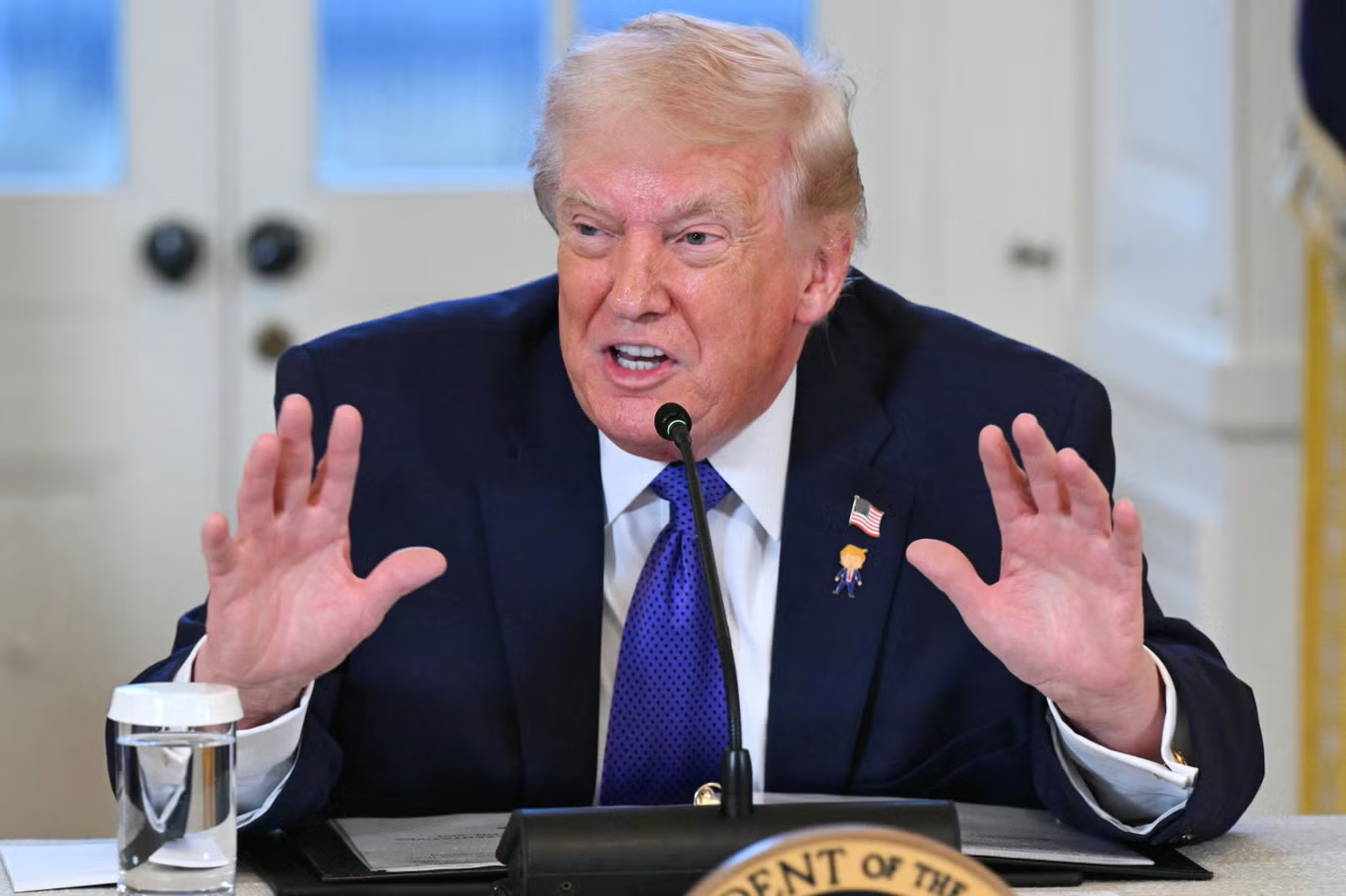
The US holds Venezuelan oil revenue in Qatar after a $500M sale, a move that has sparked global attention, political controversy, and legal questions as it unfolds against the backdrop of the United States’ deepening involvement in Venezuela’s oil industry and broader geopolitical strategies. This complex situation has implications that extend well beyond energy markets — affecting international law, US foreign policy, the Venezuelan economy, and the future of relations with the Maduro government and its critics.
Why the US Sold $500 Million in Venezuelan Oil
In January 2026, the United States completed its first major sale of Venezuelan crude since a dramatic shift in relations with Caracas, securing approximately $500 million from the transaction. These sales form part of a reported $2 billion agreement between Washington and Venezuelan authorities after significant political upheaval, including the capture of former President Nicolás Maduro by US forces.
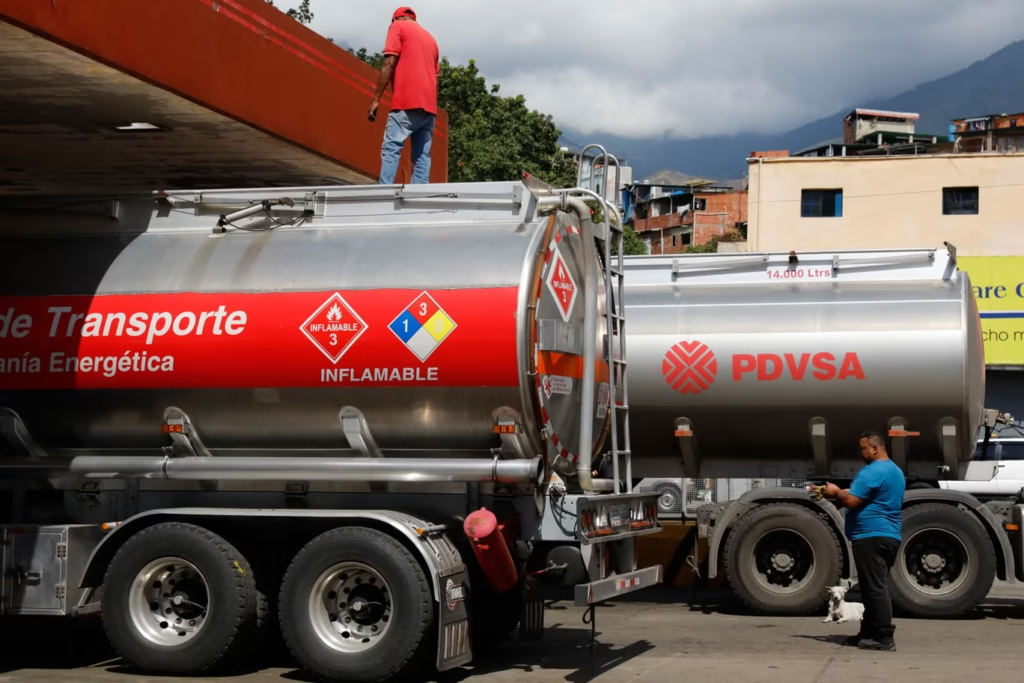
Unlike traditional oil exports, the proceeds from the sale were not transferred to the United States or directly to Venezuela. Instead, a major portion of the revenue is being held in bank accounts in Qatar, controlled under US oversight. Officials have described Qatar as a neutral location that allows for secure, unhindered movement of funds without the legal risks or seizure threats that could arise if they were held in either the US or Venezuelan financial systems.
Supporters of the strategy argue that storing funds externally protects them from creditors and legal claims, ensuring that money eventually reaches Venezuela without being diverted by lawsuits or seized under foreign judgments. Critics, however, see this as an unprecedented step with few clear legal precedents, challenging the transparency and accountability of executive action.
The Role of Qatar in Holding Oil Proceeds
Qatar’s role in this unfolding scenario is significant but not coincidental. The Gulf state is often used as a neutral financial intermediary in complex international arrangements, particularly when geopolitical tensions or legal challenges make conventional banking routes less reliable. In this case, US officials, according to reporting from Semafor and other outlets, chose Qatar to minimize the risk of asset attachment or seizure by creditors or litigants before revenues can be distributed according to diplomatic agreements.
By hosting the funds, Qatar provides a platform that is widely seen as politically neutral and financially stable, shielding the revenue from potential legal actions in the United States or Venezuela. This arrangement has drawn scrutiny from critics who argue that a public sovereign revenue should remain under direct oversight of the Venezuelan people or transparent international trusteeship, rather than being held by third-country banks under the control of the US government.
While US officials defend the approach as necessary to safeguard the interests of both Venezuela and broader Western objectives, opponents stress that this unusual mechanism could set a controversial global precedent for how seized state resources are handled in international conflict and post-conflict environments.
US Foreign Policy and Oil Revenues: A Strategic Overview
The decision to sell Venezuelan oil and hold the proceeds in Qatar does not stand alone. It is part of a broader US strategy in Venezuela, involving military intervention, economic leverage, and an accelerated push to revive an oil sector that once stood as one of the largest in the world. According to international analysts, the Trump administration views Venezuelan oil not only as a trade commodity but also as a tool of influence in Latin America.
Beyond the immediate revenue, the US reportedly now has access to up to 50 million barrels of Venezuelan crude — a valuation that could exceed $5 billion in total market value as global oil prices stabilize — reinforcing US influence over energy flows and limiting the economic resources available to former Maduro-aligned entities.
At the same time, Trump administration officials have pursued expanded licenses for major oil companies like Chevron to boost production and modernization efforts in the Venezuelan energy industry. This positions long-dormant foreign capital to re-enter a market that once produced millions of barrels daily but has since seen dramatic declines due to mismanagement and sanctions.
Domestic and International Reactions to the Move
The announcement of funds being held in Qatar has generated intense political pushback on both sides of the aisle in Washington and abroad. Some US lawmakers, including Massachusetts Senator Elizabeth Warren, have publicly criticized the move, stating there is “no basis in law” for a president to establish offshore accounts that he controls for the proceeds of assets seized by military action.
Internationally, the arrangement adds another layer to already complex relations between the US and its allies, as well as between Washington and Caracas. Venezuela’s interim leadership has indicated that portions of the funds may eventually be transferred back into local systems to support social projects and economic stabilization, including allocations to Venezuelan banks to address foreign currency shortages and inflationary pressures.
Critics and observers also warn that this approach could escalate tensions among global creditors, private litigants, and other nations with stakes in Venezuelan assets — raising concerns about legal challenges in international courts and diplomatic disputes over sovereign resource control.
What This Means for the Venezuelan Economy
Venezuela’s economic prospects — already strained by decades of political instability and sanctions — hinge significantly on how oil revenues are managed and eventually deployed. Redirecting revenue into Qatar-managed accounts may insulate funds from immediate legal risk, but it also delays their entry into Venezuela’s domestic economy, where urgent needs in infrastructure, imports, and social services remain pressing.
Some Venezuelan banks have reportedly been notified that they will receive portions of the revenue to sell on the exchange market, helping provide foreign currency liquidity in the midst of an acute dollar shortage. This could ease some market pressures and support efforts to stabilize the bolívar, which suffered steep depreciation in 2025.
Economic analysts view these developments with caution: while the inflow of foreign currency is undeniably beneficial, the structure and timing of these disbursements will play a decisive role in whether the Venezuelan economy can recover sustainably, reduce inflation, and rebuild confidence among investors and citizens alike.
Broader Geopolitical Implications
The ramifications of the US holding Venezuelan oil revenue in Qatar extend far beyond energy policy. For Washington, this move reinforces geopolitical leverage in Latin America, serves as a deterrent to rivals seeking influence in the region, and positions the US as a central arbiter of how Venezuela’s vast oil wealth is converted into economic and diplomatic currency.
At the same time, opponents argue that this approach could undermine longstanding international norms surrounding sovereign assets and economic self-determination, especially when third-party nations are used to house funds during periods of political transition. The transparency and accountability of such mechanisms will likely face continued scrutiny from global institutions and legal authorities.
These developments also underscore the intricate intersection of energy security, foreign policy, and legal frameworks in international relations — raising fundamental questions about how powerful nations manage resources from sovereign states in times of conflict and change.
A Defining Moment in US–Venezuela Relations
The strategy of holding Venezuelan oil revenue in Qatar after a $500 million sale represents one of the most consequential and contentious episodes in US–Venezuela relations in recent history. It is not merely an economic arrangement, but a multifaceted geopolitical maneuver with deep implications for international law, diplomatic norms, and the future of energy markets.
As funds gradually move toward Venezuela’s economic infrastructure, the world will be watching closely to see whether this unprecedented strategy stabilizes markets and benefits ordinary Venezuelans — or whether it ignites further controversy and legal debate on the global stage.
Subscribe to trusted news sites like USnewsSphere.com for continuous updates.