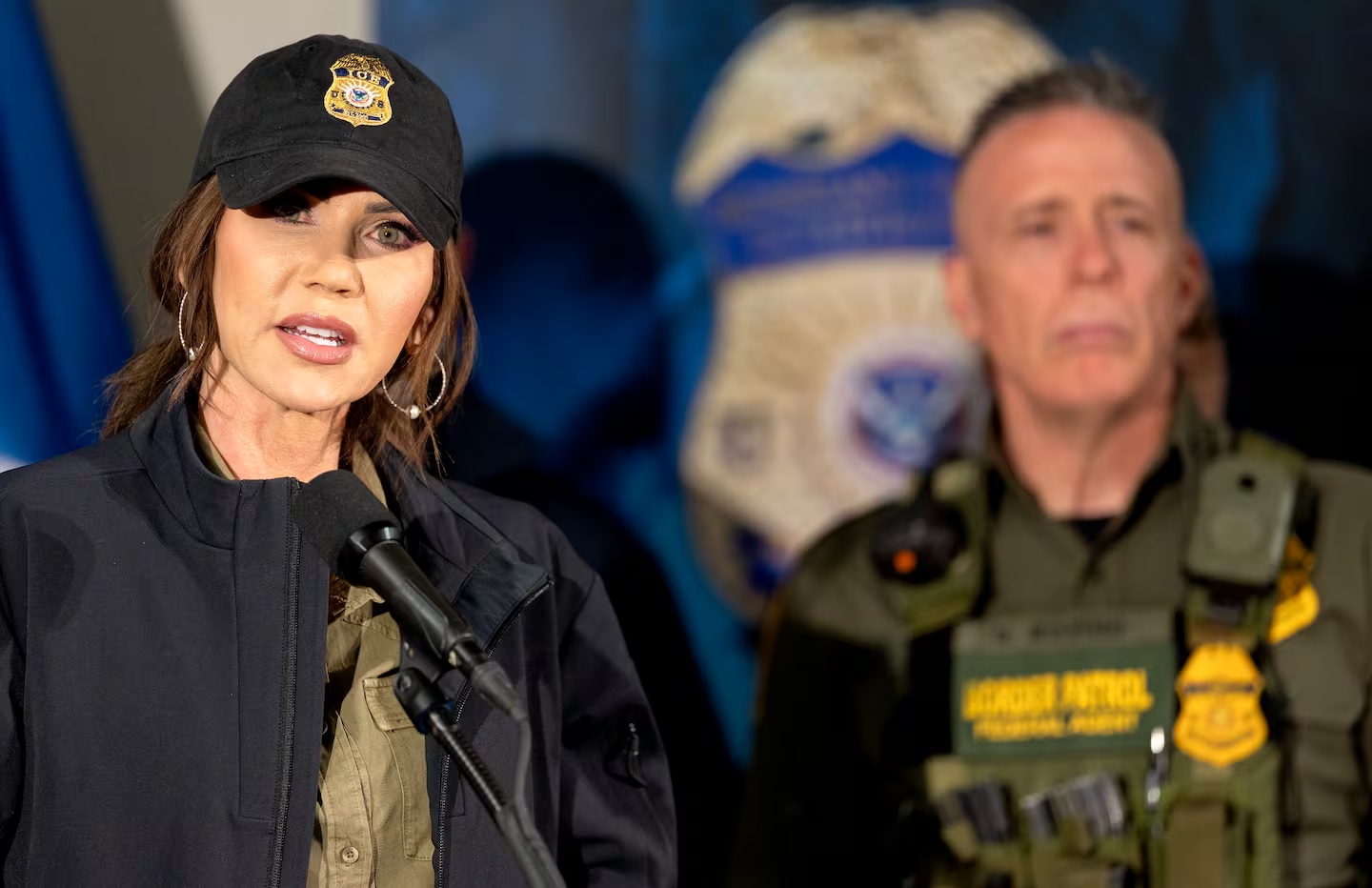
Homeland Security Secretary Kristi Noem has publicly shifted blame onto former White House adviser Stephen Miller after growing pressure over deadly immigration enforcement actions — an effort widely seen as a bid to preserve her job in the face of mounting bipartisan criticism and political fallout. In just the past week, Noem’s narrative has shifted dramatically, and her internal standing within the Trump administration has frayed as lawmakers and the public demand accountability.
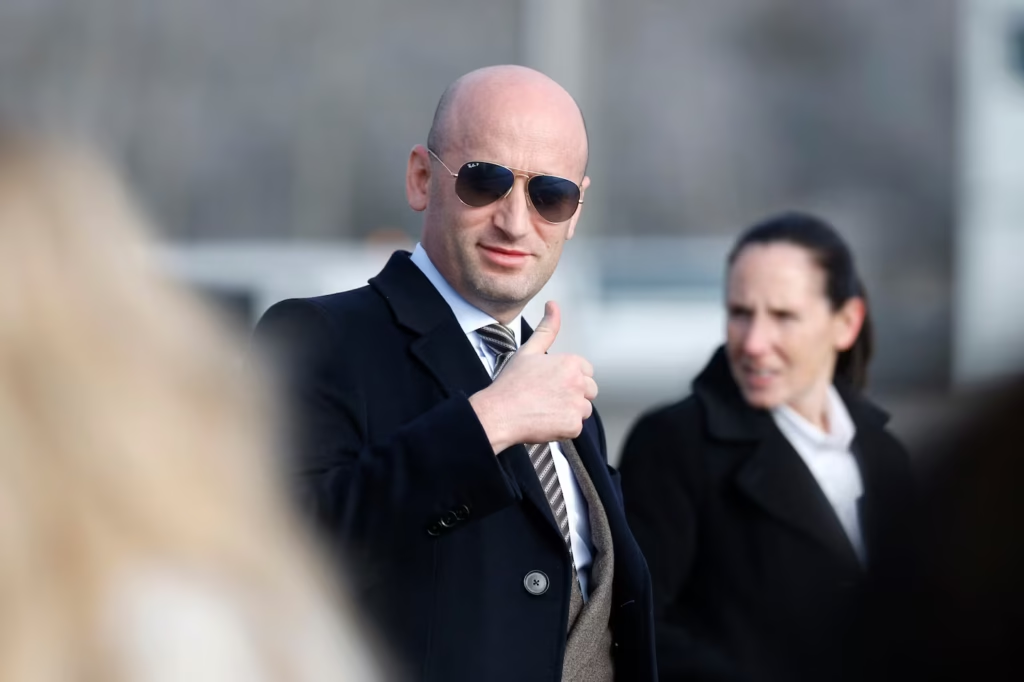
In response to the Minneapolis shooting of U.S. citizen Alex Pretti by ICE and Border Patrol agents — incidents that sparked a national outcry and raised serious questions about DHS leadership — Noem distanced herself from key members of the administration’s hard-line enforcement apparatus, particularly Miller. This shift underscores a growing split within the Trump administration over immigration policy implementation and public messaging.
Noem’s move to blame Miller signals desperation from an embattled DHS chief struggling to maintain credibility amid rising calls for her resignation — including from members of her own party — and fierce scrutiny of federal immigration operations.
Rising Tensions Over Minneapolis and DHS Messaging
Across national news outlets and political reporting, the killing of Alex Pretti — a legally armed Veterans Affairs nurse — by federal agents in Minneapolis has become the flashpoint in the controversy surrounding immigration enforcement and Department of Homeland Security strategy. Early official statements labeled the shooting as a justified act against a violent threat. Yet multiple videos and eyewitness accounts contradicted that narrative, showing Pretti did not brandish a weapon when agents fired.
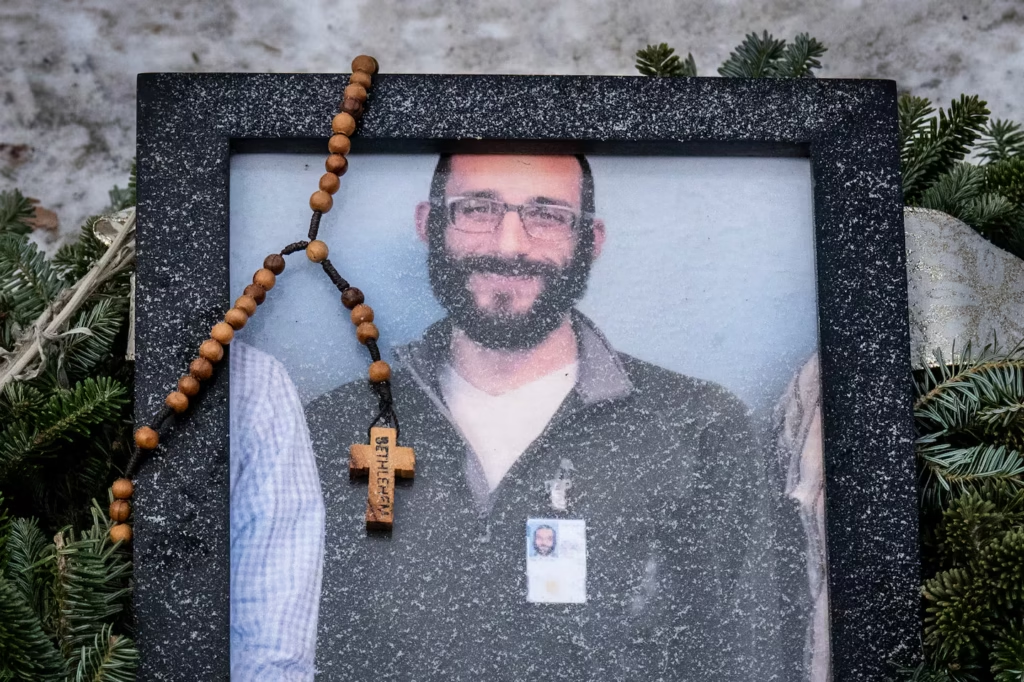
Confronted with the backlash, Noem originally echoed a statement advanced by senior officials that Pretti was a “domestic terrorist.” However, when internal and public pressure intensified, she took the unusual step of placing responsibility on Stephen Miller — known as one of the most influential architects of the Trump administration’s tough immigration policy — for shaping the controversial narrative.
Miller, who has since been conspicuously absent from key White House discussions about the DHS response, denied fault for the handling of the Minneapolis incident, indicating that the original communications came through Customs and Border Protection channels under Noem’s authority.
Bipartisan Criticism and GOP Divisions Shake Noem’s Standing
What began as criticism from Democratic lawmakers has now spiraled into a significant bipartisan rebuke of Noem’s leadership. Republican Senators, including Thom Tillis and Lisa Murkowski, publicly called for Noem to step down, labeling her approach “amateurish” and arguing it jeopardizes not only public confidence but the GOP’s political standing ahead of the 2026 midterms.
This intra-party dissension is rare in an administration where loyalty is often prioritized, highlighting how the handling of the Minneapolis case — and broader immigration tactics — is fracturing once-unified support. In addition to calls for Noem’s resignation, Democratic lawmakers have advanced impeachment support, while opposition voices on the right stress the need for a more disciplined public posture from DHS.
Despite this, President Trump has publicly defended Noem, asserting his continued confidence in her and criticizing dissenting senators as “losers,” emphasizing border security achievements even as leadership shifts occur within the department.
Internal Shakeups and Leadership Realignments
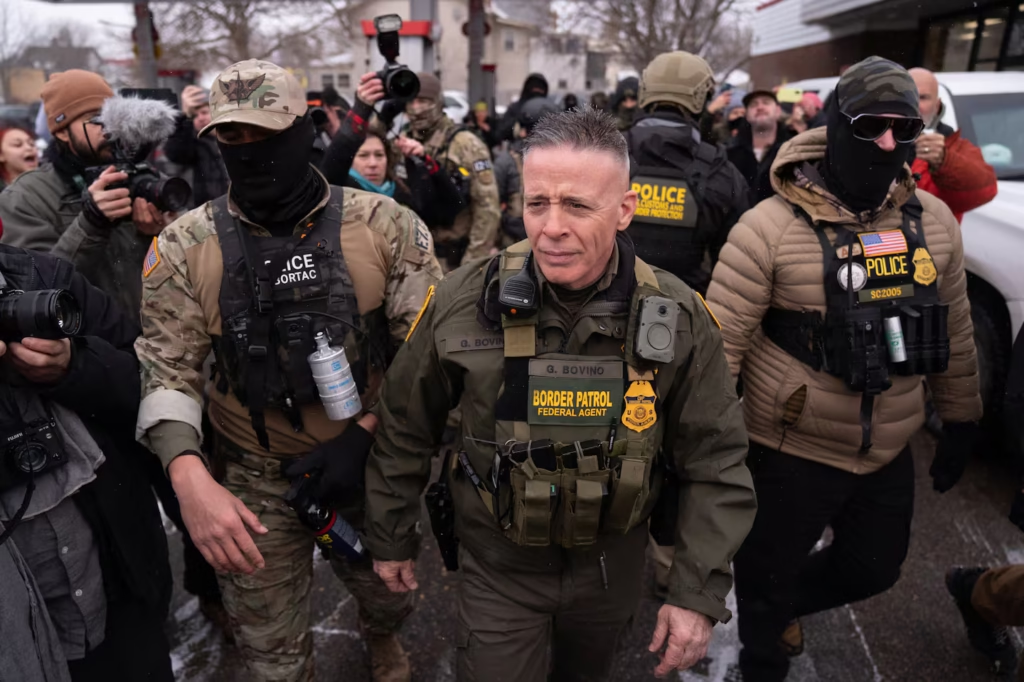
Caught in the political crosswinds, Noem’s approach has also seen operational adjustments inside DHS. Gregory Bovino — previously overseeing the Minneapolis operation — was replaced by Tom Homan in what insiders describe as an effort to stabilize enforcement tactics and public communication. Homan’s appointment is perceived as a move toward a more controlled policy execution away from Noem’s highly publicized strategy.

At the same time, reports indicate that Stephen Miller has been excluded from recent DHS policy meetings, suggesting his influence may be waning amid the broader pushback.
Other internal pressures — including the controversial conduct of top officials and rumored relationships clouding decisions — have added strain to Noem’s leadership. Critics argue these dynamics have eroded morale within the agency and amplified distrust among lawmakers.
The Broader Impact and What Comes Next
The stakes of this leadership conflict extend beyond immediate political survival. The Minneapolis shooting and DHS’s response have sparked rare Republican backlash, signaling deep divides over immigration policy, and potentially impacting voter sentiment as the U.S. approaches significant midterm elections.
If Noem cannot consolidate support or effectively manage both operational challenges and messaging, her position could become increasingly untenable — and the future of Trump’s broader immigration agenda may be reshaped in response to public and legislative pressure. Continued protests, independent investigations, and federal responses to immigration enforcement will remain in the spotlight, with DHS leadership at the center of the policy and public sentiment storm.
Subscribe to trusted news sites like USnewsSphere.com for continuous updates.