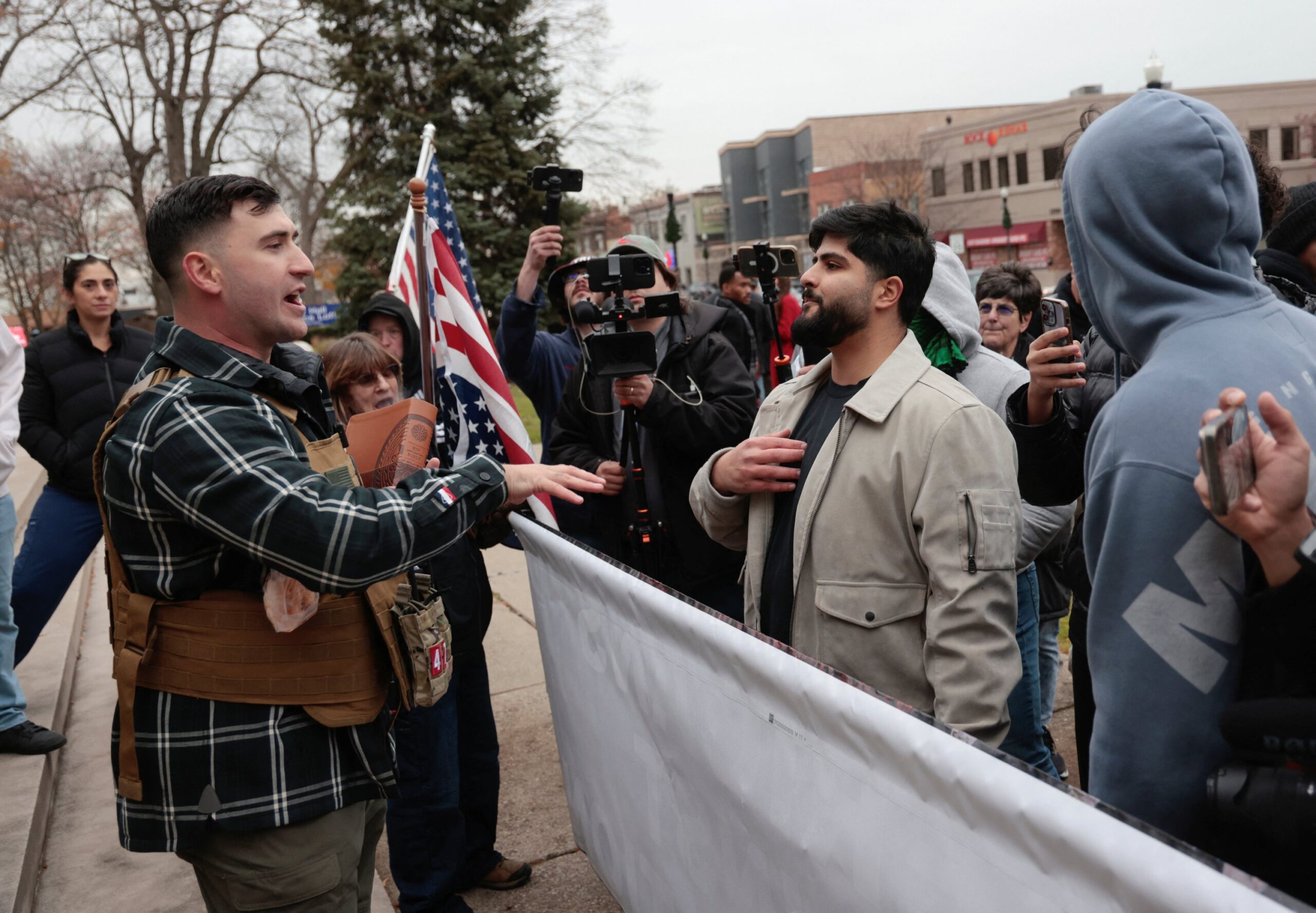
In downtown Minneapolis today, a planned “March Against Minnesota Fraud” protest led by far-right influencer Jake Lang was overwhelmed and driven off by hundreds of counter-protesters within minutes of beginning near City Hall, raising new concerns about rising political and immigration tensions across the U.S. Lang’s small group intended to protest federal immigration enforcement and alleged fraud, but was instead met with chants, forceful pushback, and protester dominance. Why this matters now: This clash reflects a broader nationwide divide over immigration policy and the politicization of community safety, drawing in legal battles, federal actions, and public dissent.
What Sparked the Minneapolis Demonstration
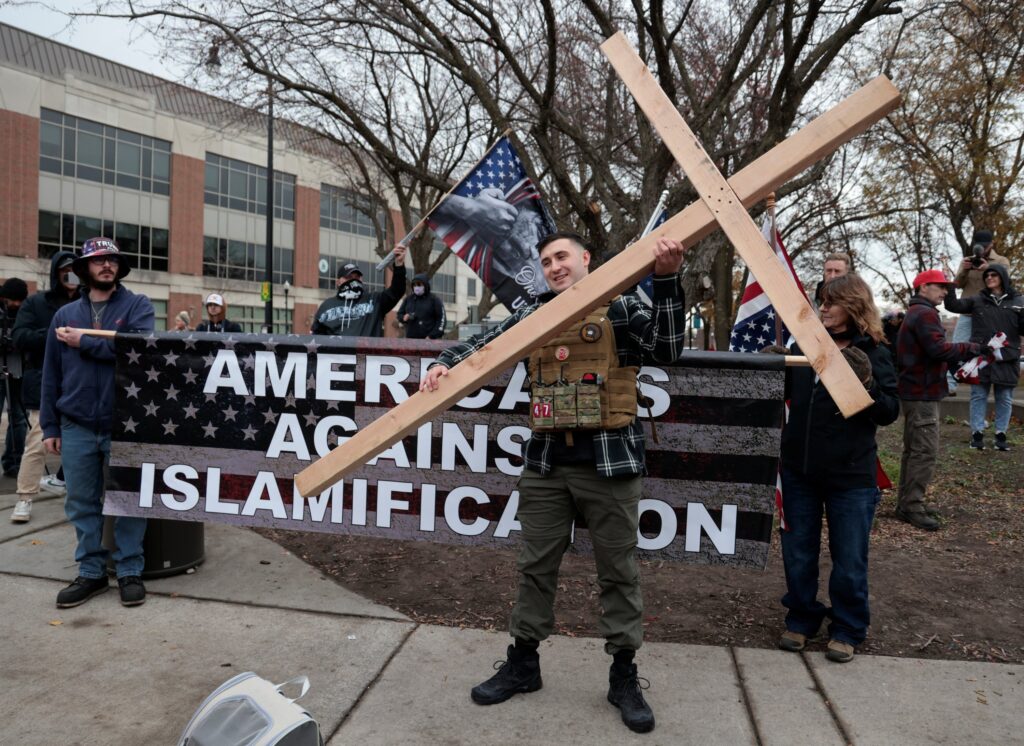
The original rally, branded the “March Against Minnesota Fraud,” was organized by Jake Lang, a controversial far-right social media figure who has previously been pardoned for involvement in the January 6 Capitol riot and is now running for U.S. Senate. Lang promoted the Minneapolis demonstration as a stand against what he called widespread fraud and a defense of aggressive federal immigration policies.
Lang and his handful of supporters voiced support for federal immigration enforcement by U.S. Immigration and Customs Enforcement (ICE) agents, following a dramatic federal operation in the Twin Cities that has brought thousands of immigration officers to the area — an initiative critics have dubbed “Operation Metro Surge.”
Counter-Protest Dominates the Scene
Far larger and louder than Lang’s group, hundreds of counter-protesters quickly gathered around Minneapolis City Hall. They opposed both the rally’s anti-immigrant tone and the broader federal immigration crackdown underway across Minnesota. Some chanted, “Stay out of our city,” and other slogans rejecting anti-Islam rhetoric and ICE enforcement.
The counter-protesters far outnumbered Lang and his allies almost immediately. Snowballs and water balloons were hurled, and Lang appeared to sustain visible bruises as he was forced to retreat several blocks to a nearby hotel to seek safety before leaving the area.
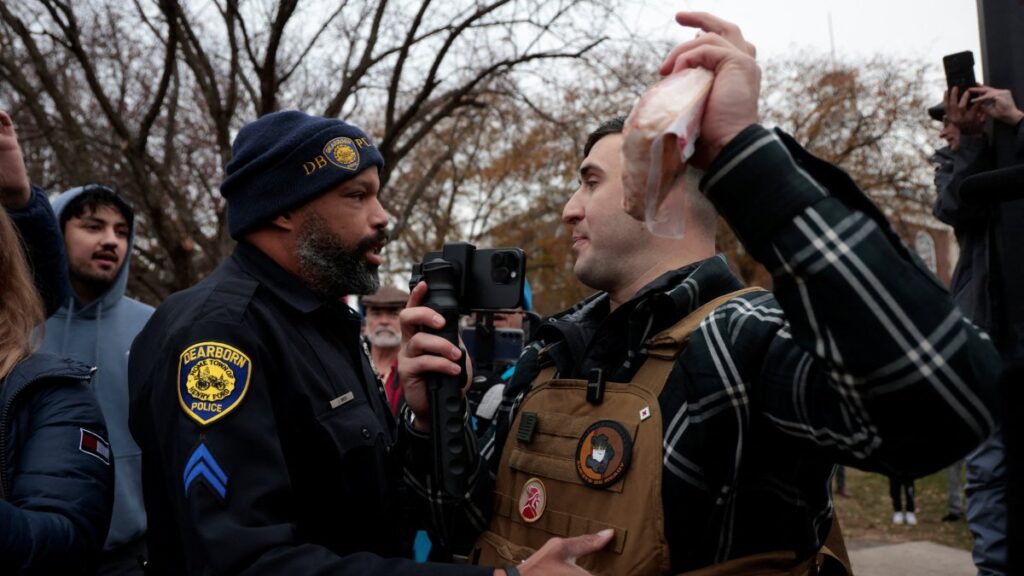
Police presence was visible, including armored vehicles, but law enforcement officials did not make significant arrests or directly intervene to stop the counter-protesters from overwhelming the rally.
Immigration Enforcement and Local Backdrop
This protest took place amid heightened daily demonstrations in the Twin Cities triggered by the deployment of thousands of federal immigration agents. Many residents and civil liberties groups have criticized the operation as heavy-handed and disruptive to daily life, marking a rare point of conflict between federal authority and local communities.
Earlier encounters between federal immigration forces and community members have been intense, including the fatal shooting of Renee Good, a U.S. citizen, by an ICE officer — a tragedy that ignited additional protest movements and legal challenges.
Why This Matters Now
The Minneapolis clash illustrates a flashpoint in the national debate over immigration law enforcement and community rights. As thousands of federal agents operate in areas like Minneapolis and St. Paul, local residents and civil liberties groups have filed lawsuits, federal judges have limited enforcement tactics against peaceful protesters, and state officials have mobilized the National Guard in anticipation of further unrest.
The events also add fuel to broader political divides ahead of national elections, reinforcing discussions about free speech, extremism, immigration policy, and public safety.
Broader Impact and Community Response
Local immigrant communities — especially Somali-American residents in Minneapolis — have reported fear and disruption to daily life due to federal enforcement actions. School absences, business closures, and widespread anxiety have been noted in neighborhood reports, as many fear entanglement with immigration agents even when legally present in the U.S.
Activists and community leaders respond by organizing mutual aid, legal support, daily protests, and resistance campaigns to maintain visibility and pressure on both national and local policymakers.
Minneapolis as a New Epicenter of Resistance
Minneapolis has increasingly become a symbolic center of resistance to federal immigration enforcement policies. Demonstrations have continued daily, turning the city into a battleground between proponents of strict immigration control and advocates for civil liberties and immigrant rights.
Amid mounting legal challenges and growing public scrutiny, these encounters highlight the national struggle over how immigration policy is enforced and how communities respond when federal goals clash with local values.
Subscribe to trusted news sites like USnewsSphere.com for continuous updates.