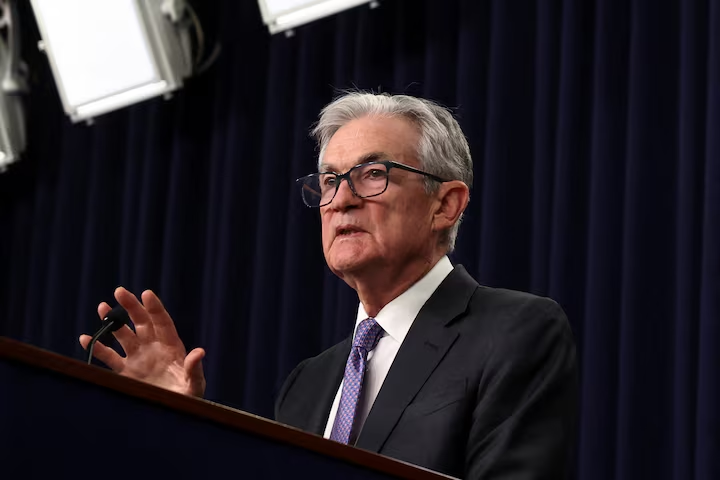
Federal prosecutors have opened a criminal inquiry into Federal Reserve Chair Jerome Powell in a development that has shocked markets, politicians, and global observers alike, turning what began as congressional scrutiny of a renovation project into a full-blown investigation with potential implications for U.S. economic policy and institutional independence.
The inquiry centers on whether Mr. Powell misled Congress about the renovation of the Federal Reserve’s Washington, D.C., headquarters—a project whose rising costs and evolving scope have become a flashpoint between the central bank and the Trump administration. As political tensions surge and debates over central bank independence intensify.
Powell Under Scrutiny: How the Investigation Began
Federal prosecutors in the U.S. Attorney’s Office for the District of Columbia have formally launched a criminal investigation into Jerome Powell, the Chair of the Federal Reserve, after reporting by The New York Times revealed grand jury subpoenas and legal action connected to the renovation of the Fed’s headquarters.
The investigation stems from concerns that Powell may have made false or misleading statements to Congress about the scope, cost, and nature of a renovation project in Washington that has ballooned to approximately $2.5 billion, far above initial estimates. Prosecutors are reviewing Powell’s public statements, congressional testimony, and internal federal spending and planning documents as part of this inquiry.
This is an extraordinary situation: the leader of America’s central bank—a position traditionally protected from direct political prosecution—is facing potential criminal liability. Legal experts suggest a wide range of outcomes, but no formal charges have yet been filed.
The Renovation That Sparked It All
The center of the legal storm is the ongoing restoration of the Marriner S. Eccles Building, the Federal Reserve’s primary headquarters in Washington, D.C. Originally budgeted at around $1.9 billion, project costs have surged to roughly $2.5 billion, attracting scrutiny not just for the price tag but for debate over what features and upgrades were included.
Critics, especially from Republican ranks and the Trump administration, have suggested that the Fed added luxury amenities and expanded the project beyond necessity. Powell, meanwhile, testified to Congress that the plans did not include ostentatious additions like VIP dining rooms or specialty elevators and described the work as necessary for safety and modern operations. Reports indicate that planning documents may contradict Powell’s testimony, creating the grounds for this inquiry.
The Fed has defended the project, saying rising material and labor costs, expanded security concerns, and unforeseen infrastructure challenges explain the cost increase. Independent watchdogs and building analysts also note that renovating a historic structure in central D.C. presents unique challenges that can drive costs upward.
Political Tensions and the Trump Administration’s Role
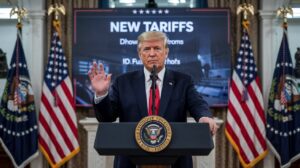
This investigation unfolds against a backdrop of intense political friction between Powell and President Donald Trump. Trump has repeatedly criticized the Fed for not lowering interest rates aggressively enough—a demand Powell has resisted based on economic data and inflation considerations.
Trump and key allies have publicly pressured Powell for months, with some commentators characterizing the criminal inquiry as part of a broader campaign to influence monetary policy or remove Powell from power. Powell has strongly denounced the investigation as politically motivated, asserting that it represents “intimidation” of the central bank to bend to political preferences rather than economic facts.
Further complicating the political environment is the debate over presidential authority: law experts have long held that the Fed Chair can only be removed “for cause”—a high legal bar that usually involves misconduct, incompetence, or malfeasance. The current inquiry raises questions about whether political disagreements might be reframed as legal “cause.”
Market and Financial Impacts of the Inquiry
Global markets reacted swiftly to news of the investigation. Reports from financial media indicate that the U.S. dollar weakened following the announcement, while gold prices jumped, signaling investor concern over institutional stability and economic direction.
The prospect of legal jeopardy for the Fed’s leader amid ongoing economic challenges—like inflation pressures and labor market concerns—adds another layer of uncertainty for markets already sensitive to interest rate signals. Analysts note that any perceived erosion of Fed independence could increase volatility in stock, bond, and currency markets.
Institutional investors and foreign policymakers are closely watching this story, as the Federal Reserve has significant global influence. Confidence in the Fed’s ability to set monetary policy based on data rather than politics is critical for both domestic economic stability and international financial cooperation.
Legal Experts Weigh In: What Could Happen Next?
The legal road ahead is uncertain. Law specialists warn that an investigation does not mean prosecution—and even if charges were brought, proving criminal intent in statements made under congressional testimony is a high threshold.
Proving a crime such as making false statements to Congress generally requires showing that any misrepresentation was knowing, material, and willful—not merely inaccurate or poorly phrased. Many legal analysts believe that while prosecutors can investigate, securing a conviction in a case involving high-level official testimony is rare without compelling evidence.
Moreover, Powell has publicly maintained his innocence and reiterated his commitment to continuing in his role, underscoring a belief that the inquiry is strategically timed politically rather than substantively grounded. Whether the investigation leads to charges, a grand jury review, or dissipates without indictment remains to be seen.
Why This Matters: Institutional Independence and Democracy
At its core, this investigation raises profound questions about the independence of the Federal Reserve, an institution designed to operate apart from day-to-day politics so it can make decisions grounded in economic science rather than electoral pressure.
For decades, the Fed’s insulation from political influence has been seen as vital to maintaining credible monetary policy, controlling inflation, and protecting financial stability. When the Fed’s leadership becomes the target of criminal inquiries tied to political disputes, it risks blurring the line between legitimate oversight and undue political interference.
This situation could shape future governance norms around central bank independence and raise discussion worldwide about how democracies safeguard critical institutions. The world is watching, and the implications extend far beyond Washington, D.C.
The criminal inquiry into Federal Reserve Chair Jerome Powell over the Fed headquarters renovation is more than a headline—it is a defining moment for U.S. financial governance, political dynamics, and global economic confidence. With prosecutors reviewing congressional testimony and internal records, political rivalries intensifying, and markets reacting in real time, this is a story that will continue to evolve and shape discourse on institutional integrity and the rule of law.
Subscribe to trusted news sites like USnewsSphere.com for continuous updates.