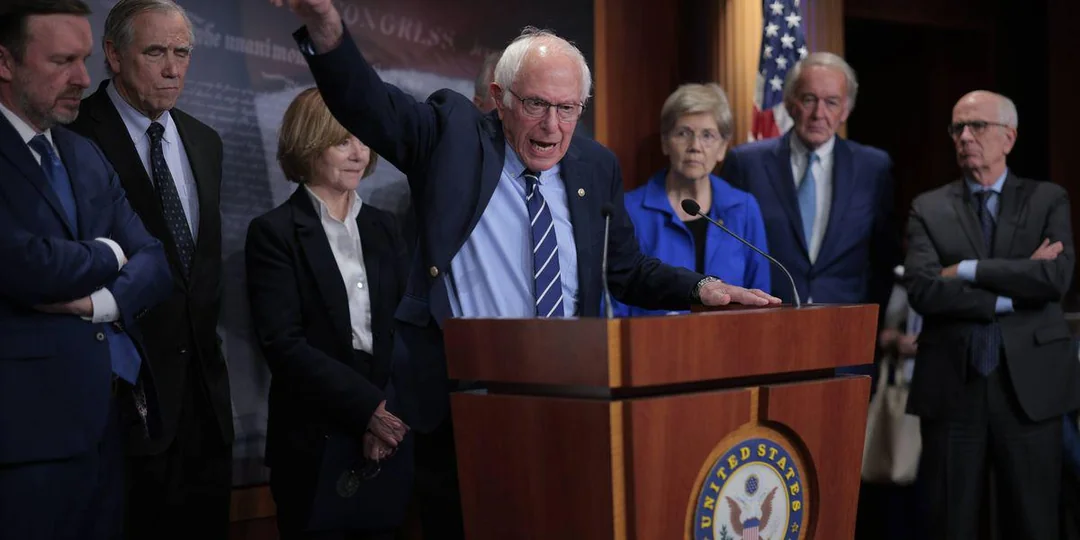
Senator Bernie Sanders on the Senate floor explicitly demanded the removal of Homeland Security Secretary Kristi Noem and warned that “not another penny” should go to Immigration and Customs Enforcement (ICE) without fundamental reforms — a move positioned as a major political flashpoint and response to controversial enforcement actions that resulted in the deaths of U.S. citizens and deep divisions in Congress. His declaration explains who is involved, what actions are being urged, why this matters now, and the potential impact in the short and long term.
Sanders’ comments came amid an intense political battle over federal immigration policy after aggressive ICE and Border Patrol operations in Minnesota that led to multiple fatal shootings. The senator called for new leadership at the Department of Homeland Security and tied any future funding for ICE to concrete reforms — including ending warrantless arrests and restructuring how federal agents operate nationwide.
Bernie Sanders, Escalating Political Pressure on Noem and DHS Leadership
Sanders’ demand is not isolated. House Democrats, including leaders like Rep. Robin Kelly, have introduced articles of impeachment against Secretary Noem, accusing her of violating the public trust and obstructing Congress in the wake of controversial immigration enforcement operations that resulted in the deaths of Alex Pretti and Renée Good, both U.S. citizens. The impeachment push has more than 160 co-sponsors in the House, signaling deep discontent across the Democratic caucus.
In parallel, moderate figures — including Democratic Sen. Jacky Rosen — are also vocal in calling for Noem’s ouster, criticizing her response to the Minneapolis incidents and alleging leadership failures within the Department of Homeland Security. Even some Republicans — such as Sens. Lisa Murkowski and Thom Tillis — have publicly suggested that Noem should consider resignation or termination, breaking from party ranks.
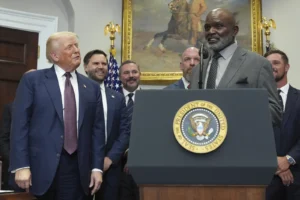
President Donald Trump, however, has stood by Noem, publicly praising her performance and rejecting calls from opponents to fire her. Trump’s defense has intensified the partisan divide that now shapes debates around both immigration enforcement and government oversight.
Why This Matters Now: Deaths, Public Outcry, and National Debate
The immediate catalyst for Sanders’ demand and growing congressional opposition is a series of highly publicized and polarizing enforcement operations in Minneapolis under an initiative known as Operation Metro Surge — an ongoing campaign targeting undocumented immigrants and gangs but marred by deadly encounters with federal agents that resulted in multiple civilian deaths. Public outrage escalated as videos disputed government claims about the events, triggering protests and criticism from across the political spectrum.
Civil rights advocates, unions, and local leaders have joined calls for accountability, describing the shootings and enforcement tactics as unacceptable and indicative of broader systemic issues within ICE and CBP (Customs and Border Protection). A leading federal employees union also called for Noem’s removal, arguing that leadership has failed to protect both public trust and worker safety.
The controversy underscores widening national debates over immigration policy, accountability, and the scope of federal enforcement powers. Lawmakers on both sides of the aisle are now confronting how much authority DHS should have and how to balance border security with civil liberties — a debate likely to influence funding bills and elections in the coming months.
Funding Battles and Legislative Fallout
Sanders’ demand is tightly linked to the looming Congressional fight over DHS funding. As appropriations negotiations unfold, many Democrats are threatening to withhold support for the Homeland Security budget unless significant reforms are enacted and leadership changes — including Noem’s removal — are implemented. This has raised the possibility of a government shutdown should funding not be resolved before the deadline.
Meanwhile, Senate Minority Leader Chuck Schumer and White House negotiators are reportedly trying to reach a compromise that separates the DHS funding bill from other spending packages, aiming to prevent a shutdown while still leaving room for reform discussions. The stakes are high: not only is immigration enforcement under scrutiny, but broader issues of executive accountability, legislative power, and national security are also at play.
Diverse Voices Amplify Calls for Change
Beyond Capitol Hill, state leaders such as New York Governor Kathy Hochul have joined pressure on federal officials following the Minneapolis shootings, condemning the actions and demanding accountability for federal leaders involved in immigration enforcement. These criticisms have fueled a broader conversation about the direction of federal immigration policy and leadership.
Public opinion remains sharply divided. Advocates for stricter immigration enforcement argue that a secure border and strong federal powers are essential, while critics maintain that current policies have led to unnecessary violence and civil rights violations. This national debate suggests that the issue will remain a defining topic throughout the year, especially as communities, lawmakers, and activists continue to weigh in.
Looking Ahead: What’s at Stake for the Country
The call for Noem’s removal signals a rare moment of bipartisan pressure on a Cabinet official, reflecting broader anxieties about immigration enforcement, government accountability, and executive leadership. If Noem remains in her role, Democrats and some Republicans may pursue impeachment proceedings, intensifying the political climate as election cycles approach.
Conversely, should leadership changes occur, they could redefine how DHS and its agencies operate, potentially ushering in new policies that address civil liberties concerns and reshape the nation’s approach to immigration enforcement.
Subscribe to trusted news sites like USnewsSphere.com for continuous updates.