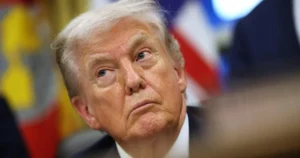
Trump Calls for Nationalising Voting, Igniting Fierce Debate Over the Future of U.S. Elections
Trump Urges Republicans to Nationalise Voting, Reshaping U.S. Election Debate
In a controversial new push that has captured headlines across the United States, former President Donald Trump urged Republican leaders to nationalise the voting process — effectively taking control of ballot administration away from states and centralising it at the federal level. The American election system comes at a critical moment as the 2026 midterms approach and debates over election rules intensify. Trump’s remarks on the matter have sparked fierce debate across the political spectrum and raised deep constitutional questions about federal authority versus states’ rights in administering elections.
What Trump Proposed and Where It Came From
During an interview on The Dan Bongino Show, Trump said Republicans should “take over the voting” in at least 15 states, suggesting a nationwide standard or oversight that bypasses individual state election systems. He repeated long-debunked claims about illegal voting and alleged widespread corruption in local vote counting — claims that election officials and courts have consistently rejected as false.

Trump did not detail exactly how such nationalisation would work, but the core idea he promoted was that Republicans should seize authority over vote administration to ensure what he believes would be a fair outcome.
Nationalising Voting: Why This Matters Now
This surge in rhetoric is occurring amid broader Republican efforts to reshape election laws nationwide, including proposals in Congress for new voting requirements such as proof of citizenship and photo ID mandates. House Republicans have introduced the Make Elections Great Again Act, which aims to overhaul election procedures with stricter rules for voters and election offices alike.
With control of Congress on the line and the midterm elections approaching, Trump’s comments have energised supporters while alarming critics, who see the push as an escalation of efforts to centralise power and potentially curb voter access.
The Constitutional and Legal Clash Ahead
Under the U.S. Constitution, states are primarily responsible for determining the “times, places, and manner” of elections, meaning election administration has traditionally been decentralised and managed at the state and local level. However, Congress retains some authority to establish federal standards. Many legal experts argue that Trump’s call for nationalisation would conflict with this long-standing system, creating major constitutional friction if pursued.

Earlier legal rulings have already struck down parts of the executive efforts to alter election rules, emphasising that unilateral federal changes to how Americans vote are not permitted.
Political Reactions Across the Spectrum
Response to Trump’s proposal has split sharply along political lines. Some Republicans have embraced stronger federal involvement in elections, while others — including GOP voices who traditionally emphasise states’ rights — have criticised the suggestion. Democratic leaders and voting rights advocates, meanwhile, warn that the move could suppress voter participation and erode public confidence in election integrity. Independent analysts also observe that Trump’s remarks are likely aimed at boosting support among his political base by appealing to his narrative of past election grievances.
Critics argue that stripping states of election authority could disenfranchise large groups of eligible voters, disproportionately affecting marginalised communities, low-income voters, and elderly citizens — issues highlighted by the American Civil Liberties Union and other civil rights groups.
Impact on Voters and Future Elections
If Republicans were to successfully push a path toward federal control of voting systems, the impact could be profound. Election administration, from ballot design to vote counting and reporting, could become standardised across all states. That might reduce variation in election procedures, but it could also heighten political tensions and distrust in regions that value local control. Critics argue this could lead to confusion, legal challenges, and weakened voter participation.
In contrast, proponents of federal involvement argue it could bring consistency to voting procedures, reduce administrative errors, and ensure nationwide standards. However, consensus on these effects remains elusive in a deeply divided political environment.
What Comes Next? The Path Forward
Trump’s call to nationalise voting is unlikely to translate into immediate legal change — any attempt would require extensive legislation or court affirmation, both of which are steep hurdles given the current political balance. Congress would need to take up the issue formally, and the Supreme Court could once again play a decisive role in determining the limits of federal authority over election administration.
Meanwhile, public debate is intensifying, with both electoral reform advocates and defenders of local election authority mobilising to shape the narrative ahead of future elections. The question now is not simply whether voting should be nationalised, but how Americans define fair and secure elections in a time of heightened political division.
Subscribe to trusted news sites like USnewsSphere.com for continuous updates.