Europe lies at a historic crossroads as global tensions surge and traditional alliances are tested, and Europe must unite or it’s finished has become the rallying cry of Polish Prime Minister Donald Tusk amid rising geopolitical uncertainty. This crucial moment isn’t just political rhetoric — it reflects deep fractures within transatlantic relations, increasing pressure from a resurgent United States foreign policy under Donald Trump, and urgent calls from European leaders to bolster unity in defense, economy, and diplomacy.
Europe Must Unite Critical Moment: Unity or Decline
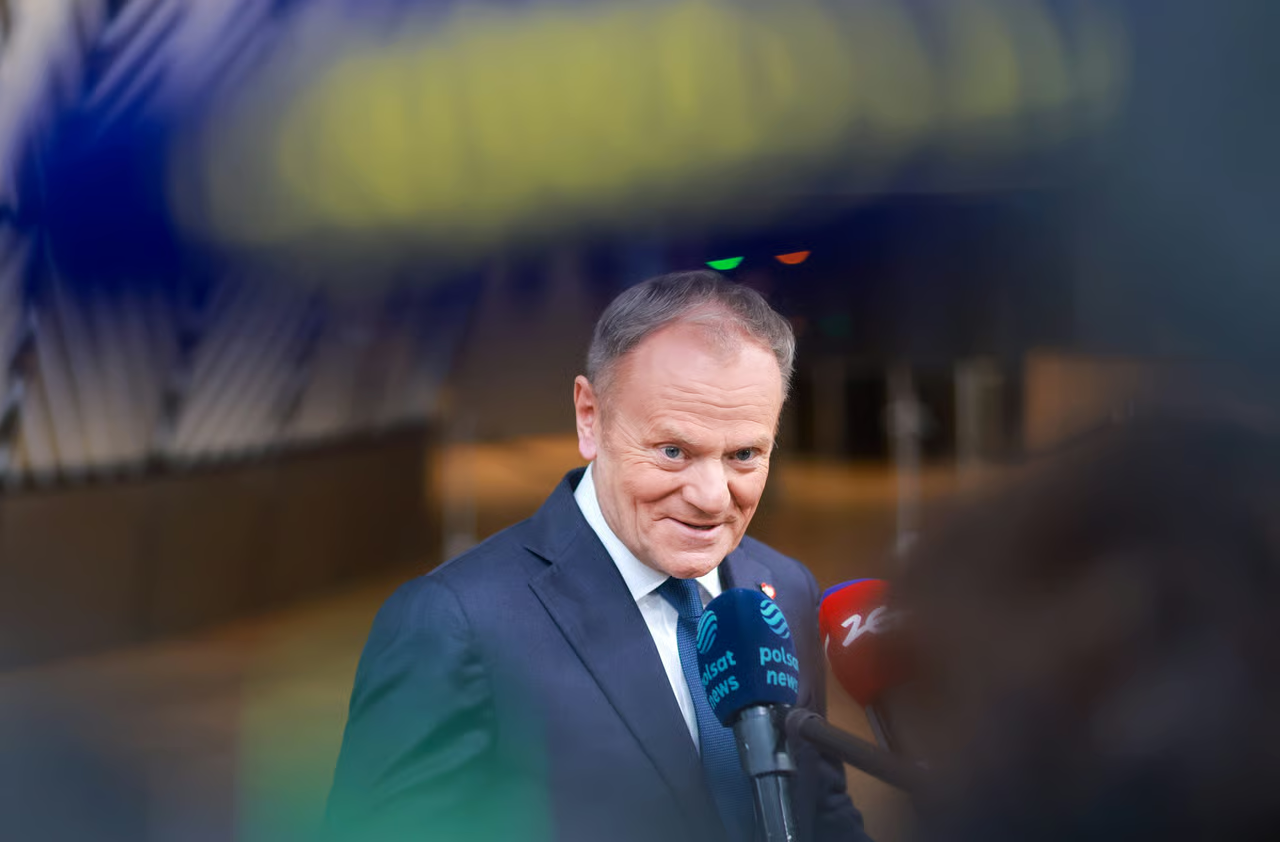
In the face of mounting international pressure and shifting global alliances, Polish Prime Minister Donald Tusk warned that the European project could falter if the continent does not deepen its unity and assert its strategic autonomy. Speaking publicly and across social platforms, Tusk emphasized that Europe can no longer afford to be divided — not economically, politically, or militarily — and that its very survival hinges on solidarity among member states. This warning comes amid rising geopolitical strains, including transatlantic disagreements with the United States and intensifying security challenges from Russia, China, and other global actors.
Tusk’s appeal underscores a broader narrative: a Europe Must Unite is not just beneficial, it’s existential. With a combined population exceeding 450 million people and the world’s largest single market, the EU has unparalleled potential — but only if leaders can bridge internal divisions and speak with one voice on matters of defense and foreign policy. Analysts suggest that Europe’s unity will determine not only its destiny but its capacity to navigate crises like the war in Ukraine, economic competition with China, and relations with the United States.
Transatlantic Strains: Diplomacy Under Pressure
Central to Europe’s current test of unity is the evolving relationship with the United States, particularly under the foreign policy direction of Donald Trump’s second administration. Trump’s approach has sparked alarm in European capitals, with critics arguing that certain elements of U.S. strategy could undermine long-standing alliances. Some European officials have interpreted parts of the United States’ National Security Strategy as portraying Europe not as a partner, but as a liability to American interests — a shift that stokes fears of strategic divergence between Washington and Brussels.
Tusk, among others, responded directly to this shift by urging the U.S. not to treat a united Europe as a problem but as a key ally. “Europe is your closest ally, not your problem,” Tusk wrote, reminding Washington of shared history and joint efforts in confronting global threats, particularly in defense of Ukraine and deterring Russian aggression. His words reflect growing European dissatisfaction with any suggestion that the U.S. might deprioritize NATO’s collective defense commitments or encourage political fragmentation within Europe.
The Greenland Flashpoint: Geopolitics and Sovereignty
While much of the debate about unity and alliance focuses on military and economic dimensions, symbolic flashpoints — like the controversy over Greenland — illustrate how easily alliances can fray under pressure. Greenland, an autonomous territory of Denmark and of significant strategic importance in the Arctic, has become a geopolitical flashpoint in U.S.–Europe relations. Donald Trump has repeatedly suggested that the United States should gain control of Greenland, either by purchase or other means, framing it as essential to American defense interests — an idea met with fierce rejection by Danish and Greenlandic leaders.
Danish Prime Minister Mette Frederiksen and Greenlandic Prime Minister Jens-Frederik Nielsen both condemned suggestions that Greenland could be annexed, emphasizing the importance of sovereignty, international law, and mutual respect between allies. European Union leaders have echoed these positions, stressing that territorial integrity cannot be compromised for geopolitical maneuvering.
This standoff reveals a deeper truth: unity isn’t just about economic or military alignment, it’s about standing together against external pressures that challenge Europe’s autonomy and values. When an ally suggests actions that could alter the territorial status of a European partner, it forces the continent to reassess the nature and limits of that alliance.
Security Challenges: Russia, Ukraine, and Defense Cooperation
Europe’s unity is also being tested by security challenges that demand collective action, most notably the war in Ukraine. While NATO remains a cornerstone of European defense, differing threat perceptions and defense spending priorities have sparked debate about how to best secure the continent. Many European leaders, including Tusk, argue for greater investment in collective defense capabilities within the EU, while also reinforcing NATO’s role.
This debate comes as Russia’s invasion of Ukraine continues to destabilize Eastern Europe, prompting calls for a sustained and cohesive response. Leaders from Berlin to Warsaw have highlighted the need for sustained support to Ukraine, stronger deterrence measures, and a unified political stance against Russian aggression. Without unity, critics warn, Europe’s ability to deter future threats is significantly weakened.
Economic Solidarity in an Interconnected World
Unity for Europe isn’t limited to defense and security; economic integration remains a foundational pillar of the European project. The EU’s single market and trade agreements give Europe unmatched leverage on the global stage. However, internal economic disparities between member states, coupled with external competitive pressures from China and the U.S., challenge cohesion. To remain competitive and autonomous, Europe must not only deepen its internal economic ties but also harmonize policies that support collective growth and resilience.
Efforts such as the proposed European Defence Bank — championed by Tusk — are examples of initiatives designed to consolidate economic and strategic capacity. Proponents argue that such mechanisms could help finance defense projects and reduce reliance on external powers for security investments.
Why Unity Matters: A Strategic Imperative
When leaders like Tusk issue stark warnings about Europe’s future, they are speaking to a broader strategic reality: in an era of shifting alliances, multipolar competition, and rising great power tensions, fragmentation is Europe’s greatest vulnerability. Without unity, the continent risks being sidelined on issues ranging from defense to trade, climate policy to technological innovation. Unity offers not just survival — it offers strength.
In practical terms, a unified Europe can wield significant influence in global diplomacy, leverage economic power to shape international norms, and maintain collective defense mechanisms capable of deterring adversaries. It would also ensure that European values — democracy, rule of law, human rights — remain central to international order at a time when authoritarian forces seek to expand their reach.
What This Means for the Future
Europe’s future depends on its ability to reconcile internal differences and present a cohesive front on the world stage. Leaders must use this moment to expand cooperation rather than allow geopolitical pressures to divide them. Whether addressing threats from Russia, negotiating with global partners like the United States, or responding to economic challenges, unity remains essential. ND
Tusk’s warning — that Europe could be finished without unity — is dramatic, but for many analysts, it captures the seriousness of the moment. The lessons for Europe, and the world, are clear: alliances must be nurtured, collective defense must be prioritized, and mutual respect between partners must be unwavering.
Europe’s path forward will require tough negotiations, shared sacrifice, and a renewed commitment to the principles that underpinned its formation. But with unity, Europe will not just survive — it will thrive and continue to shape the global order in a way that benefits not just Europeans, but the wider world.
Subscribe to trusted news sites like USnewsSphere.com for continuous updates.