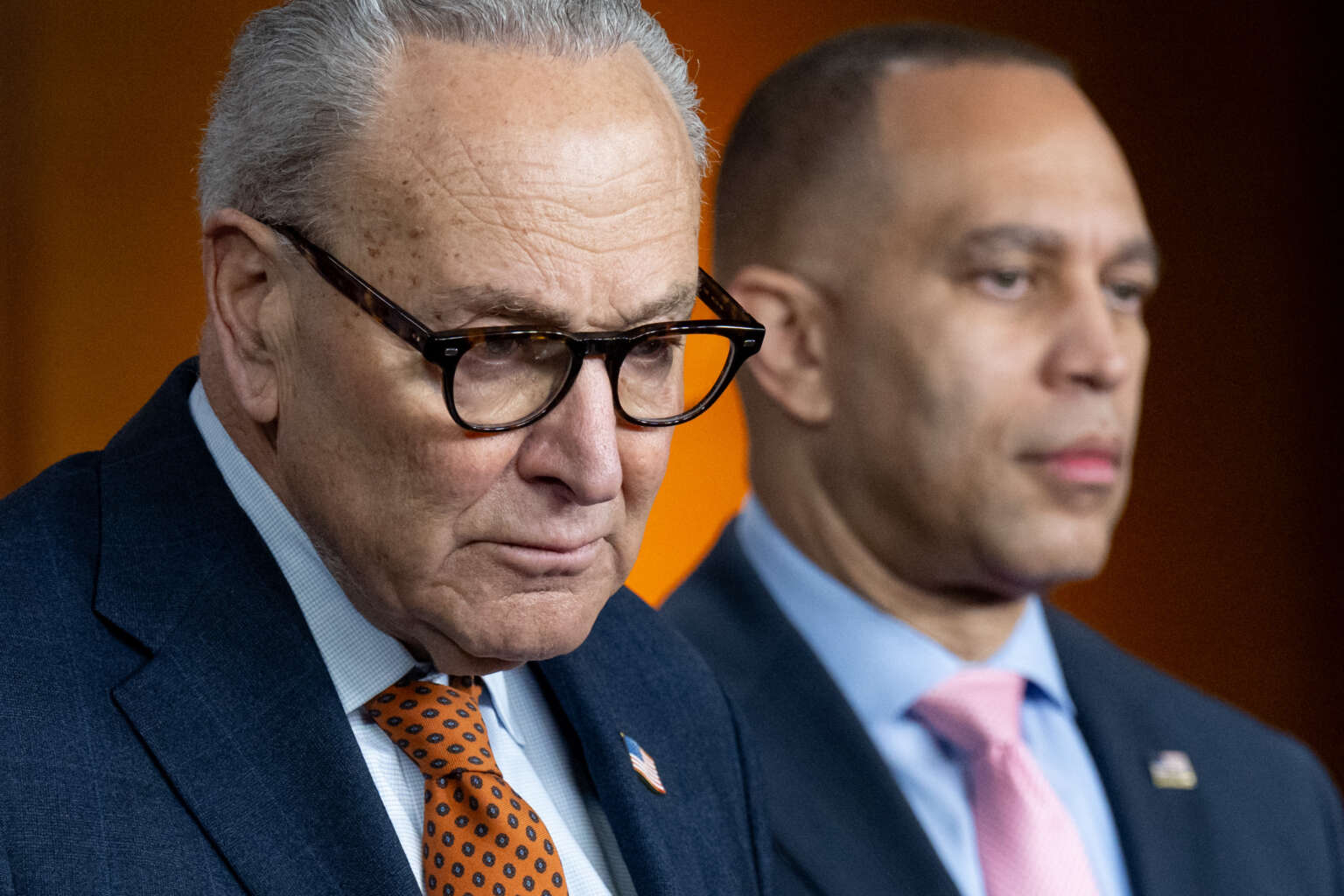
In the wake of a deeply controversial ICE-involved shooting in Minneapolis that has galvanized public outrage across the nation, Senate Minority Leader Chuck Schumer and House Minority Leader Hakeem Jeffries have refused to back expanding Democratic calls to defund Immigration and Customs Enforcement (ICE) — a stance that has placed them at odds not just with progressive lawmakers but with a broader tide of activists and voters demanding accountability and policy change.
This moment represents one of the sharpest tests yet of Democratic Party unity over immigration enforcement and federal law enforcement funding — and could have lasting ramifications for the 2026 elections, internal party cohesion, and the future of how enforcement agencies like ICE operate within American communities.
Minneapolis Shooting Sparks Nationwide Outrage and Policy Debate
The national uproar began after a 37-year-old Minneapolis resident, Renee Nicole Good, was killed by an ICE agent during an enforcement action. Court records identify the federal officer involved as Jonathan Ross, and though federal authorities have defended the shooting as an act of self-defense, local and national leaders have sharply questioned that narrative.
Video footage that circulated widely on social media shows Good attempting to drive away during the encounter and being shot multiple times, raising urgent questions about the use of lethal force by federal immigration agents and the protocols governing such operations. That footage inflamed public sentiment and set off protests, with civil rights groups and local officials calling for independent investigations and broader reconsiderations of ICE’s scope and mission.
Progressive Democratic lawmakers, including Representatives Alexandria Ocasio-Cortez and Pramila Jayapal, have seized on the controversy to argue that federal agencies should be reined in and that defunding ICE entirely should be on the policy table — not shunned.
Democratic Leadership’s Calculated Response: No Support for Defunding
Despite the growing pressure, Schumer and Jeffries have made clear they will not entertain calls to defund ICE as part of the upcoming government funding negotiations. At joint press conferences, both leaders condemned the shooting in moral terms but stopped short of endorsing radical restructuring of ICE’s budget or mandates.
Instead, they have emphasized legislative priorities such as extending health care subsidies under the Affordable Care Act and passing other appropriations bills without making immigration enforcement a central point of leverage. Jeffries stated the party’s focus was on completing “the three bills that are going to be on the floor,” and stressed accountability can be pursued “at the appropriate time.”
Schumer, when directly asked if he would support abolishing or defunding ICE, did not offer a firm answer — saying only that he had “lots of problems with ICE.” His reluctance to tie ICE funding to broad legislative fights reflects a desire to avoid the type of protracted government shutdown standoff that destabilized Congress in recent months.
Progressive vs. Establishment Democrats: A Deepening Rift
The leadership’s stance has exacerbated tensions between the establishment and progressive wings of the Democratic Party. Progressives argue that strong rhetoric without action is insufficient and that using the appropriations process — Congress’s most powerful tool — is the most logical point of leverage to curtail ICE’s authority and funding.
Representative Delia Ramirez of Illinois urged that the January 30 deadline for government funding offers a unique opportunity to impose “commonsense limitations” on ICE’s reach. Some progressives have even suggested that Democrats risk losing credibility if they fail to align rhetoric with tangible budgetary pressure.
Yet many centrist Democrats remain cautious. They worry that pushing a government shutdown for this cause — even one grounded in principle — could be politically risky and potentially alienate swing voters who are sensitive to messaging about public safety and law enforcement. This caution mirrors broader Democratic debates about whether strong anti-ICE messaging helped fuel conservative victories in recent elections.
The Political Stakes: Midterm Elections and Public Sentiment
The political stakes could not be higher. With midterm elections on the horizon, Democrats are intensely focused on strategies that will sustain or expand their power in Congress. Many of them believe that highlighting issues like health care, economic support, and infrastructure resonates more with a broad electorate than sharply partisan debates over immigration enforcement.
Yet public opinion on ICE is notably shifting. Polls over the last year have shown that support for ICE and other aggressive immigration enforcement measures has declined, with increasingly diverse demographics expressing discomfort with unrestrained enforcement tactics. Public approval for ICE has fallen significantly, according to recent surveys, underscoring a growing sentiment that reform — if not defunding — should be on the table.
This context matters because Democratic leaders are acutely aware that policy stances on immigration enforcement could impact turnout among key voting blocs, including Latino voters and younger progressives, who are more likely to view ICE critically.
What Defunding ICE Really Means – And What Reform Advocates Want
To many lawmakers and activists, “defunding ICE” doesn’t simply mean eliminating the agency’s budget; rather, it means redirecting funds toward community-based immigration solutions, oversight, and accountability mechanisms, and curtailing ICE’s capacity to operate without stricter legal constraints.
Progressive proposals include requiring warrants for arrests, banning militarized gear during domestic operations, and limiting ICE activities in cities far from the southern border — all intended to balance national security with civil liberties. Such reforms would represent a marked departure from current enforcement doctrines.
Opponents of defunding argue that ICE plays an essential role in national border security and immigration law enforcement — a position that has been strongly echoed by Republican lawmakers and conservative commentators. For example, following the Minneapolis shooting, some Republicans framed the backlash as an attempt to weaken national security infrastructure at a vulnerable moment.
Balancing Act: Leadership’s Strategic Calculus and Party Priorities
Schumer and Jeffries face a delicate balancing act: appeasing progressive factions without alienating moderates and centrist voters, and addressing public outcry over ICE actions without triggering legislative gridlock.
Their leadership decisions show a preference for incremental policy tactics over confrontation with the executive branch or reflexive budget battles — a choice rooted not only in ideological pragmatism but also in tactical caution aimed at preserving legislative momentum on other fronts, such as the healthcare marketplace and economic supports.
In doing so, these leaders are betting that targeted oversight and incremental reform will succeed where sweeping budget battles could fail politically — a unique and often controversial approach within a party fractured along ideological lines.
Conclusion: A Defining Moment for Democratic Policy and Unity
As the nation continues to grapple with the fallout from the Minneapolis shooting and larger debates over immigration enforcement, the Democratic Party’s internal divisions over ICE funding reflect a broader struggle over identity, policy priorities, and electoral strategy. Whether Schumer and Jeffries’ caution proves wise or electorally costly remains to be seen, but what is clear is that calls to defund or dramatically reform ICE are now central questions in national political discourse.
This controversy is not only about one agency’s budget — it is about the future of federal enforcement policy, the direction of Democratic leadership, and how Americans want their government to balance security with justice and civil rights.
For continuous, reliable, and high-value updates as this story develops, be sure to follow trusted news sources.
Subscribe to trusted news sites like USnewsSphere.com for continuous updates.