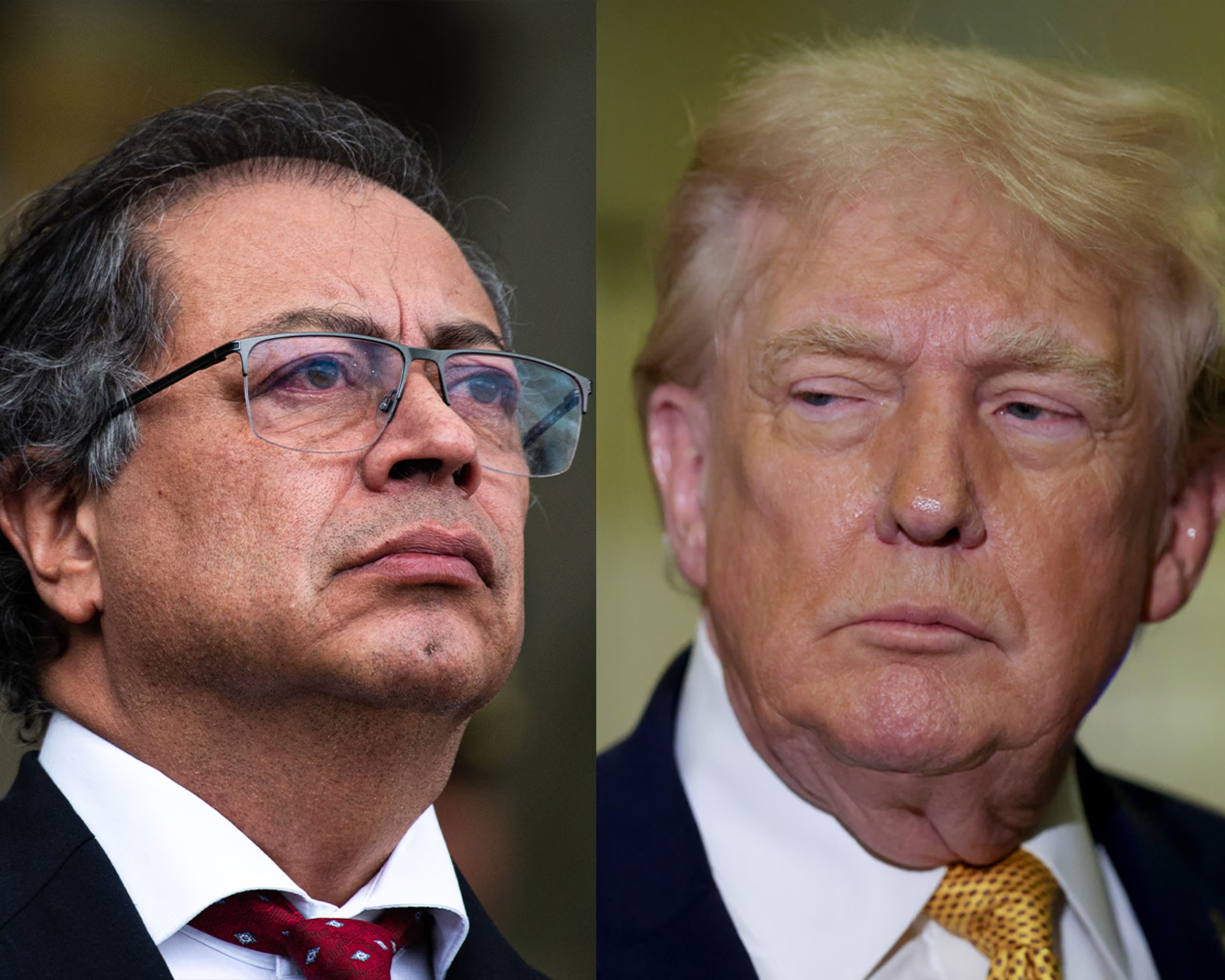
Trump Threatens Military Action Against Colombia, Petro Vows to Defend Sovereignty — Global Tensions Escalate
U.S. President Donald Trump’s startling comments about Colombia this week — signaling that military action “sounds good” following a U.S. invasion in neighboring Venezuela — have ignited fierce diplomatic conflict and widespread international concern about a broader regional crisis. The Colombian government, led by President Gustavo Petro, has sharply rejected the claims and warned of a renewed call to arms to defend national sovereignty if the United States escalates its military engagement toward Colombia. This developing confrontation now dominates headlines around the world and is rapidly becoming one of the most significant geopolitical flashpoints of 2026.
Rising Tensions After U.S. Military Action in Venezuela Fuel Colombia Crisis
On the heels of Operation Absolute Resolve, the U.S. military’s high-profile strike that culminated in the capture of Venezuelan President Nicolás Maduro, President Donald Trump publicly hinted that Colombia could be the next focus of U.S. intervention. Trump accused Colombian President Gustavo Petro — without presenting verifiable evidence — of running cocaine production facilities that feed into the U.S. drug market. He stated that military action against Colombia “sounds good to me” when asked if U.S. forces might act similarly as they did in Venezuela.
Colombian government officials wasted no time condemning the rhetoric, urging that Colombia will maintain cooperative anti-drug efforts but will defend its sovereign territory at all costs. Despite allegations, there is no independent verification that Petro or his administration operates drug production enterprises — a point emphasized by regional observers and independent analysts.
This shift marks a dramatic worsening of bilateral relations between Bogotá and Washington, altering decades of previously close cooperation that focused on counter-narcotics and economic collaboration.
Petro’s Response: Promises of Sovereign Defense and Rejection of U.S. Claims
President Gustavo Petro responded forcefully across both public statements and official social media posts, categorically denying Trump’s accusations while pledging that Colombia will defend itself against any unauthorized foreign military action. A former guerilla who disarmed under Colombia’s 1989 peace accords, Petro’s declaration that he would “take up arms again” if necessary represents a dramatic and emotional appeal to Colombian patriotism.
Petro’s government has reiterated its commitment to lawful anti-drug strategies and stepped-up cooperation with U.S. law enforcement agencies, even as it pushes back against what it calls “baseless slander” and undue interference. Leaders across Colombia’s Congress, civil society, and military leadership have rallied behind Petro’s sovereignty warnings, signaling strong internal support for resisting foreign aggression.
Analysts note that Petro’s stance reflects deeper anxieties across Latin America about U.S. strategic intentions in the hemisphere, especially following the controversial operation in Venezuela.
Global Reactions: Allies Urge Restraint, Critics Condemn Escalation
The United Nations, European Union, and several Latin American governments have expressed alarm over the possibility of a widening conflict. Critics describe the U.S. military’s detention of Maduro and the subsequent threats toward Colombia as a violation of international law and a dangerous precedent for sovereign nations in the Western Hemisphere.
Countries such as Brazil, Mexico, and others in the region have urged both Washington and Bogotá to prioritize diplomatic channels, while powers like Russia and China sharply criticized the U.S. intervention as imperial overreach. These responses reveal growing global concern over unilateral military actions and their implications for international norms.
Civil society and religious organizations in Colombia have also voiced concern regarding the potential humanitarian impact of any foreign military action. Colombian Catholics and other community leaders have warned of instability and the risks of civilian harm should tensions continue to rise.
Historical Context: Long-term U.S.-Colombia Relations Strained
While Colombia has often been one of the United States’ closest allies in Latin America — especially in anti-drug trafficking operations — relations have been increasingly volatile under Trump’s second presidency. Measures such as visa revocations for Petro, financial sanctions on his aides, and prior disputes over deportation policy have contributed to a gradual deterioration in trust.
The broader Operation Southern Spear (a series of U.S. naval and aerial deployments linked to anti-narcotics initiatives) has repeatedly drawn criticism from Colombian officials, particularly over perceived civilian harm and sovereignty violations in past joint operations.
A series of tariff disputes and diplomatic rows over immigration further frayed ties, culminating in the current crisis — a period that many foreign policy experts regard as one of the sharpest downturns in U.S.–Colombia relations in decades.
Regional Impact: Latin America On Edge
The consequences of this dispute are being felt across Latin America. Governments and citizens alike are worried that the conflict — already causing economic and diplomatic ripple effects — could easily escalate into military confrontation if not addressed through negotiation.
Border communities, particularly along the Colombia–Venezuela frontier, are bracing for humanitarian strain, refugee flows, and heightened security tensions. Meanwhile, stakeholders in neighboring countries are watching closely, fearful that a U.S. intervention in Colombia could embolden further actions in Mexico, Cuba, or beyond.
For many regional leaders, the focus now is on urging Washington to seek international cooperation, rather than unilateral military actions, and on reinforcing diplomatic mechanisms that can diffuse tensions before open conflict erupts.
What Comes Next: Diplomacy, Defense, or De-escalation?
As world powers call for restraint and Colombia strengthens its defenses, the immediate question remains whether cooler heads in Washington and Bogotá can find a diplomatic solution that prevents a broader clash. Many analysts suggest that economic sanctions, international legal forums, and multilateral peace talks will play central roles in the coming weeks.
Colombia’s insistence on sovereignty and continued cooperation on anti-drug initiatives, juxtaposed with Trump’s aggressive rhetoric, sets the stage for intense negotiations. How this unfolds will likely influence not only bilateral ties but the future of U.S. engagement throughout Latin America. TIME
Conclusion – A Defining Geopolitical Moment
The unfolding conflict between the United States and Colombia represents a historic pivot point in inter-American relations. With both leaders standing firm on their respective positions — and the world watching — the stakes extend far beyond diplomatic posturing. If left unmanaged, this crisis could reshape regional security frameworks and international norms around sovereignty, intervention, and global governance.
As global news networks, foreign governments, and citizens continue to follow these developments in real time, the coming days are critical. No matter the outcome, this confrontation will leave a lasting impact on Colombia, U.S. foreign policy, and hemispheric geopolitics for years to come.
Subscribe to trusted news sites like USnewsSphere.com for continuous updates.