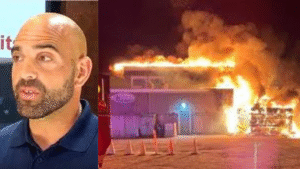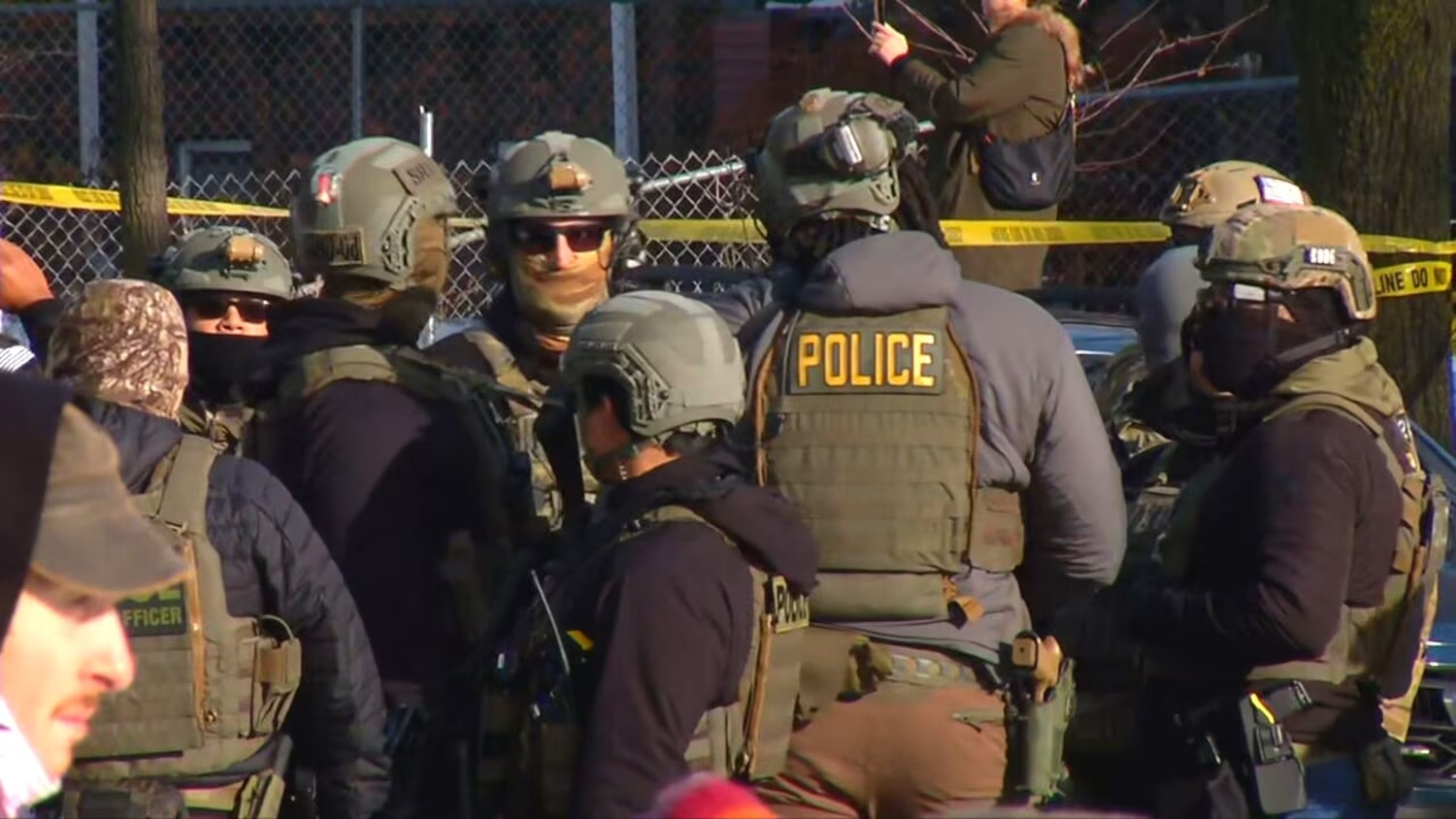
The ICE officer who fatally shot 37-year-old Renee Nicole Good in south Minneapolis has been publicly identified as Jonathan Ross, a veteran Immigration and Customs Enforcement agent whose actions have sparked intense national debate and mass protests.
In a case that unfolded amid heightened tensions over federal immigration efforts, Ross’s role in the deadly encounter — and his history with law enforcement — has triggered sharp criticism from local leaders, civil rights advocates, and members of the national media, while federal officials maintain that his use of force was justified.
What Happened in Minneapolis and Who Was Renee Good
On the morning of January 7, 2026, local residents witnessed a dramatic confrontation between federal immigration agents and Renee Nicole Good, a 37-year-old Minneapolis mother of three.
Good — described by friends and family as a poet, parent, and creative spirit — was sitting in her vehicle on Portland Avenue when at least four ICE agents from two separate vehicles approached her car. Conflicting orders were reportedly given, and body-camera and bystander videos later showed agents attempting to engage with her before shots were fired.
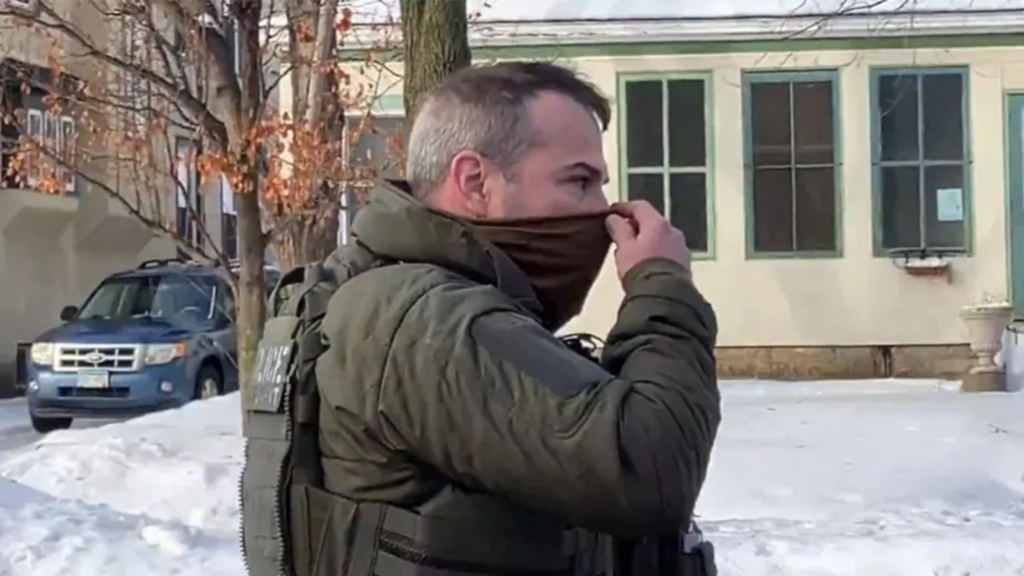
According to multiple eyewitness accounts, Good posed little obvious threat at the time, and her vehicle was not clearly advancing toward officers in a dangerous manner. Still, federal officials allege she used her vehicle as a weapon, a point of contention that has fueled public outrage and competing narratives surrounding the incident.
She was pronounced dead later that day after being transported to a Minneapolis hospital, leaving a grieving community and family in shock.
Officer Identified — Jonathan Ross and His History
Federal authorities have confirmed that Jonathan Ross, a ten-year veteran ICE agent, was the officer who fired the fatal shots. Ross has been with Immigration and Customs Enforcement since at least 2016 and served on the agency’s Special Response Team, according to local press reports.
Ross’s name gained attention previously in June 2025, when he was dragged roughly 50 yards by a fleeing vehicle during an unrelated enforcement action in Bloomington, Minnesota — an injury that required dozens of stitches. Federal leaders including Vice President J.D. Vance referenced this past incident while defending the Minneapolis shooting as justified self-defense.
Despite these federal endorsements, many experts and critics have noted that being previously traumatized or injured does not automatically validate the use of lethal force. In fact, several use-of-force specialists have publicly stated that shooting at a moving vehicle is generally discouraged in modern law enforcement protocols.
Conflicting Accounts: Federal Narrative vs. Eyewitness Video
Federal officials, including Homeland Security leadership, maintain that Good’s vehicle became a deadly threat to officers during a federal enforcement operation — a claim that the city’s mayor and eyewitnesses sharply dispute.
Bystander footage shared across social platforms shows Good’s car positioned sideways in the road near East 34th Street, with the driver signaling for ICE vehicles to pass. Some witnesses say she was trying to move her vehicle out of the way when shots were fired.
Local political figures such as Minneapolis Mayor Jacob Frey have publicly dismissed the federal justification, calling it inaccurate and misleading, and challenging the official account that Good’s actions warranted lethal force.
This clash of accounts has only added to the emotional intensity of the conversation, with many calling for independent analysis of the available video and evidence.
Investigation Underway, FBI Takes Lead
In the hours following the shooting, the Federal Bureau of Investigation (FBI) assumed exclusive control of the investigation — a move that blocked Minnesota state law enforcement from accessing crucial evidence and case files.
Governor Tim Walz and other state officials have criticized this decision, calling it a lack of transparency and an impediment to justice for Good’s family and the broader community.
The shift in investigative control is significant, as it alters the usual process for high-profile law enforcement death investigations, raising constitutional questions about federal versus state authority.
Community Reaction and Calls for Justice
The response to the shooting has been swift and widespread.
Protests and Public Outcry
Hundreds of demonstrators filled Minneapolis streets in the days after the killing, demanding justice, accountability, and answers about federal involvement in local public safety. Many compared the incident to past police killings of civilians, viewing the response as emblematic of deeper systemic issues in federal law enforcement operations.
Political Fallout
Local politicians, civil liberties groups, and leaders from both parties have weighed in — some condemning the shooting as unjustified use of force, others backing ICE’s operational authority. Governors, mayors, civil rights advocates, and national lawmakers have all called for a transparent, independent investigation.
Experts Weigh In
Use-of-force specialists have criticized the federal narrative that deadly force was necessary, emphasizing that targeting moving vehicles is often discouraged and deadly force should remain a last resort.
Broader Implications for Federal Enforcement and Immigration Policy
This case has become more than an isolated tragedy — it has ignited a national debate over federal law enforcement powers, immigration policy, and the use of lethal force by armed agents operating off federal property.
Civil liberties advocates argue that current oversight mechanisms for federal agents are insufficient and call for stronger policies governing when and how deadly force is used, particularly in urban areas with civilian populations.
At the same time, federal officials point to a broader crackdown on immigration enforcement, emphasizing the legal authority granted to agencies like ICE. This creates a tension between local accountability and federal prerogative — a debate likely to shape future policy discussions and legislative efforts in Washington.
Why This Matters
The killing of Renee Good in Minneapolis demands careful scrutiny, not only because of the immediate human tragedy but also due to the wide-ranging implications for public trust, law enforcement oversight, and the balance of federal and state authority.
This is a defining moment in how the United States handles enforcement actions within its own borders, particularly in contexts where those actions intersect with vulnerable communities and public rights. AP News
As investigations continue and more footage and materials become public, the national conversation about use of force, transparency, and community protection will only grow more intense.
Conclusion: A Tragic Turning Point in Minneapolis
The recent Minneapolis shooting involving ICE Officer Jonathan Ross and the fatal shooting of Renee Good represents one of the most controversial law enforcement incidents in recent U.S. history. With conflicting narratives, a shifting investigative landscape, mass protest movements, and national political attention, this case symbolizes the deep fractures in current public safety and immigration policy debates.
As the community seeks justice and accountability, the country watches closely — and the questions raised by this tragic event will echo far beyond the streets of Minneapolis.
Subscribe to trusted news sites like USnewsSphere.com for continuous updates.