Trump’s Venezuela Military Strike Ignites Rare MAGA Dissent and Global Outcry
The United States’ unprecedented military strikes in Venezuela — culminating in the capture of the South American nation’s president — have sent shockwaves through American politics, triggered rare internal resistance within MAGA circles, and sparked widespread international condemnation.
On January 3, 2026, President Donald J. Trump announced that U.S. forces had executed a covert military operation targeting Venezuelan leadership and “captured” President Nicolás Maduro and his wife. Trump framed the offensive as a strategic move in the ongoing fight against narcotics trafficking and what his administration calls “narco-terrorism,” but critics from across the political spectrum argue the action raises grave legal, ethical, and geopolitical questions.
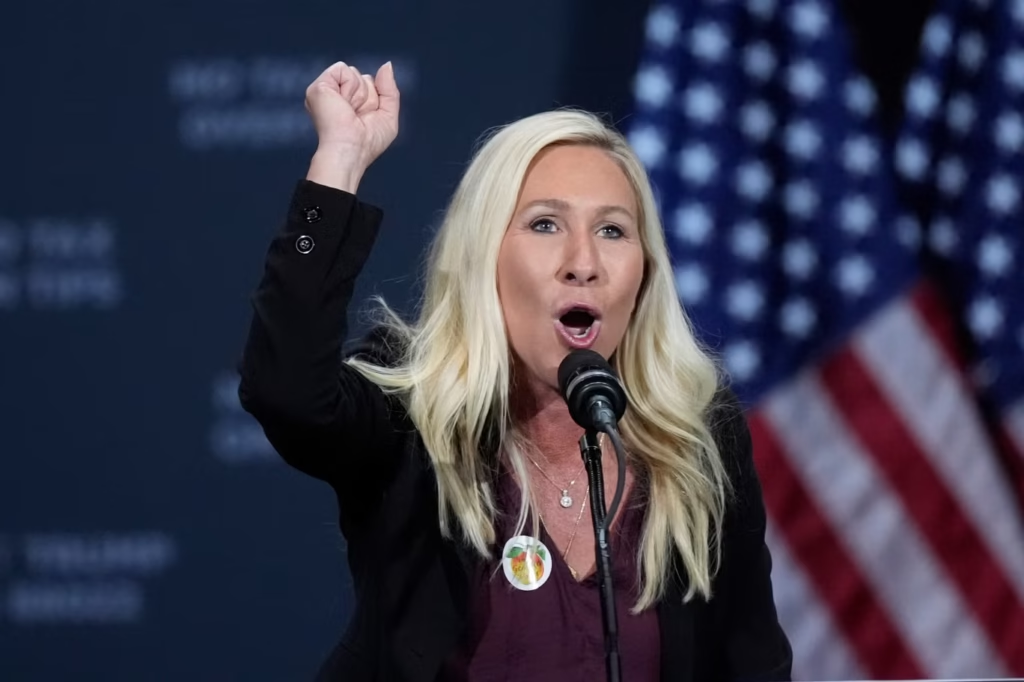
In the U.S., the operation has ignited rare discord within Trump’s own Republican base, with some leading MAGA figures openly rebuking what they see as unnecessary foreign intervention. Internationally, governments and global institutions have reacted with alarm, urging respect for sovereignty and warning of broader instability. This article unpacks the unfolding crisis — from domestic political fallout to global implications — in a comprehensive, data-rich narrative designed for both readers and search engines.
A Bold Military Move: U.S. Strikes and Seizure of Venezuelan Leadership
President Trump’s announcement marked a sharp escalation beyond recent U.S. pressure campaigns in Latin America.
In a statement released on social media, Trump confirmed that the United States carried out “large B-scale strikes” in Venezuela and successfully captured President Nicolás Maduro and his wife. Trump asserted the operation was executed “in conjunction with U.S. law enforcement” and articulated a justification centered on alleged drug trafficking and national security threats.
The Trump administration also declared that the United States would temporarily administer the governance of Venezuela “until a safe and stable transition is ensured,” and indicated interest in tapping into Venezuela’s vast oil resources — a move that some analysts view as a significant strategic objective beyond narcotics interdiction.
This marks the first time in modern history that the United States has seized a head of state from a sovereign nation in such a manner, prompting comparisons to early 21st-century interventions and raising complex questions about authority, legality, and international norms.
MAGA Backlash: A Defining Split Within Trump’s Base
One of the most striking domestic responses has come from within Trump’s traditional political coalition.
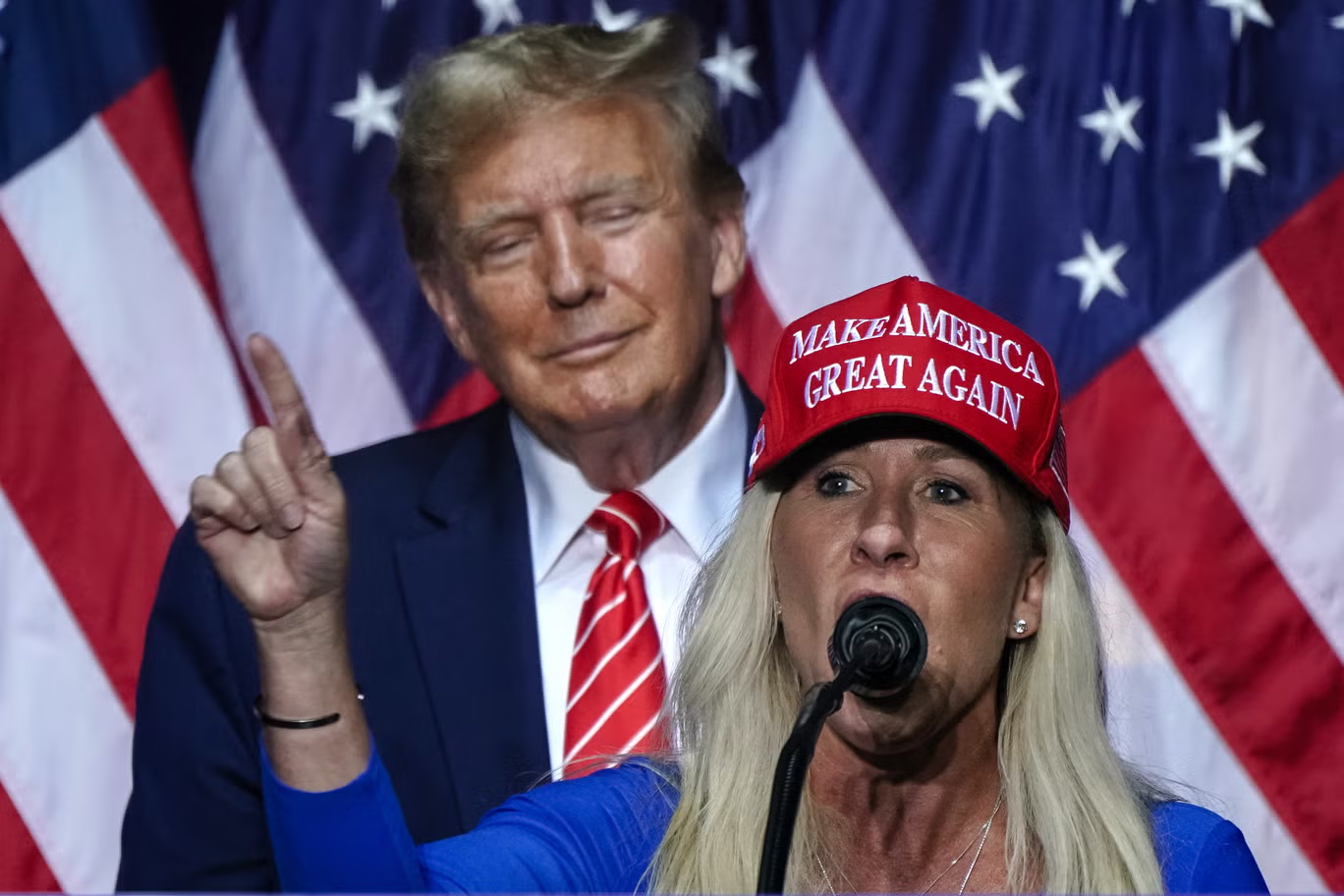
Prominent Republican Representative Marjorie Taylor Greene — once an ally — publicly rebuked Trump’s military action, asserting it represented “exactly what many in MAGA thought they voted to end.” Greene argued that many Trump supporters believed a vote for the former president was a vote against endless foreign wars, regime-change interventions, and the use of American tax dollars for overseas conflicts.
In her series of posts on X (formerly Twitter), Greene challenged the justification that the Venezuela operation was primarily about combatting drug trafficking. She noted that a significant majority of fentanyl-related deaths in the U.S. originate from drugs entering through Mexico, yet Trump’s administration had not taken comparable military action against Mexican cartels. Her critique struck a chord among some conservative commentators who echoed concerns about mission creep and foreign entanglements.
This rare MAGA dissent raises deeper questions about the ideological cohesion of Trump’s base and suggests a potential political realignment — especially among voters who prioritize domestic over international action.
American Political Rift: Congress and Legal Authority Debates
Across the broader U.S. political landscape, reactions have been intense and sharply divided.
Democratic lawmakers condemned the operation as unconstitutional and illegal without congressional authorization. Senator Andy Kim was among those who accused the administration of circumventing constitutional processes, emphasizing that no formal declaration of war had been passed by Congress. Other Democrats described the strike and capture as a dangerous precedent, warning it could set the stage for unchecked executive military action.
In contrast, Republican leaders like House Speaker Mike Johnson lauded the Trump administration’s decisiveness, framing the operation as a necessary action to protect American interests and dismantle illicit networks that allegedly harm U.S. citizens. Senators such as Tom Cotton publicly supported the president, echoing claims that Maduro’s administration constituted a “narco-terrorist” threat deserving of legal and military response.
This split reflects a broader constitutional debate about the balance of war powers between the executive branch and Congress — a discussion that is now front-and-center in national political discourse.
Regional Impact: Venezuela in Turmoil
Inside Venezuela, the reaction has been marked by uncertainty, fear, and mobilization.
Following the strikes and the reported capture of President Maduro, Venezuelan authorities declared a state of emergency, a legal move allowing expanded military authority and suspension of certain civil liberties. Venezuela’s government blasted the U.S. action as “imperialist aggression,” urging civilians to take to the streets and condemn what it described as a blatant violation of sovereignty.
Scenes from Caracas showed smoke rising over parts of the capital, with some neighborhoods seeing militia activity while others remained eerily quiet. Maduro loyalists and opposition groups alike are grappling with the power vacuum and uncertainty about what comes next.
At the same time, discussions have emerged about transitional political arrangements — including the possibility of the Venezuelan National Assembly appointing interim leadership to steer the country through the crisis.
Global Condemnation and Calls for Restraint
The U.S. military action triggered fierce international pushback, with capitals from around the world weighing in.
Regional governments lamented the escalation. Colombia, which shares a border with Venezuela, called for urgent de-escalation and humanitarian protection measures for civilians caught in the conflict. Brazil’s President Luiz Inácio Lula da Silva condemned the strikes as a violation of sovereignty, warning that it could undermine regional peace and stability.
Beyond Latin America, other global powers issued strong statements. Cuba’s leader denounced the strike as “state terrorism” against Venezuela and the broader region, urging a swift international response. Iran’s foreign ministry echoed these sentiments, framing the action as a flagrant violation of territorial integrity.
The European Union called for restraint and respect for international law, while calls were made at the United Nations for urgent discussions about the legality and future of the U.S. operation. The U.N. Security Council scheduled a high-level meeting to address the crisis amid mounting concerns that the action could set a dangerous precedent for global intervention.
Geopolitical Ripples: What This Means for International Norms
Experts suggest that the ramifications of the U.S. strike go far beyond borders.
By targeting and seizing the leadership of another sovereign nation, the United States has entered uncharted geopolitical territory. Critics argue that this could erode long-standing norms against using military force for regime change — a shift that rival powers like China and Russia may exploit to justify their own future interventions. The Guardian
At the same time, domestic and foreign policy analysts warn that the disruption may lead to increased instability in Latin America, potential refugee flows, and strained diplomatic relations with key allies and institutions invested in upholding the rules-based international order.
Conclusion: A Turning Point in U.S. Foreign Policy and Political Identity
The U.S. strikes in Venezuela and the subsequent capture of President Nicolás Maduro mark a pivotal moment in contemporary American political and military history.
What was traditionally considered a “last resort” option — direct military engagement and regime disruption — has now widened fault lines in U.S. politics, fractured parts of the MAGA coalition, and drawn sharp rebukes from international actors. As lawmakers, world leaders, and citizens digest these developments, the implications for constitutional authority, regional stability, and global norms remain deeply unsettled.
Observers will be watching closely in the weeks and months ahead to see how the situation in Venezuela evolves, how the U.S. government defends and defuses criticism, and whether this episode reshapes how America engages on the world stage.
Subscribe to trusted news sites like USnewsSphere.com for continuous updates.