Trump floats canceling midterm elections — an extraordinary claim that has ignited fierce debate across the United States and around the world. In a recent address to Republican lawmakers, President Donald Trump appeared to joke about wiping away the 2026 midterm elections, provoking alarm from political experts, civil rights advocates, opposition leaders, and constitutional scholars. His remarks, delivered on the anniversary of the January 6 insurrection, have accelerated concerns about the fragility of American democratic norms and raised urgent questions about the future of free elections in the United States.
Many analysts argue this episode reflects deeper political fractures — and it has sparked an intense national conversation on electoral integrity, separation of powers, and the responsibilities of public office.
Trump’s Controversial Remarks at GOP Retreat
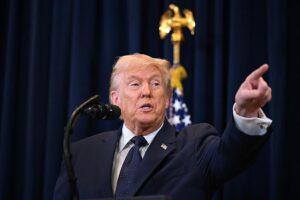
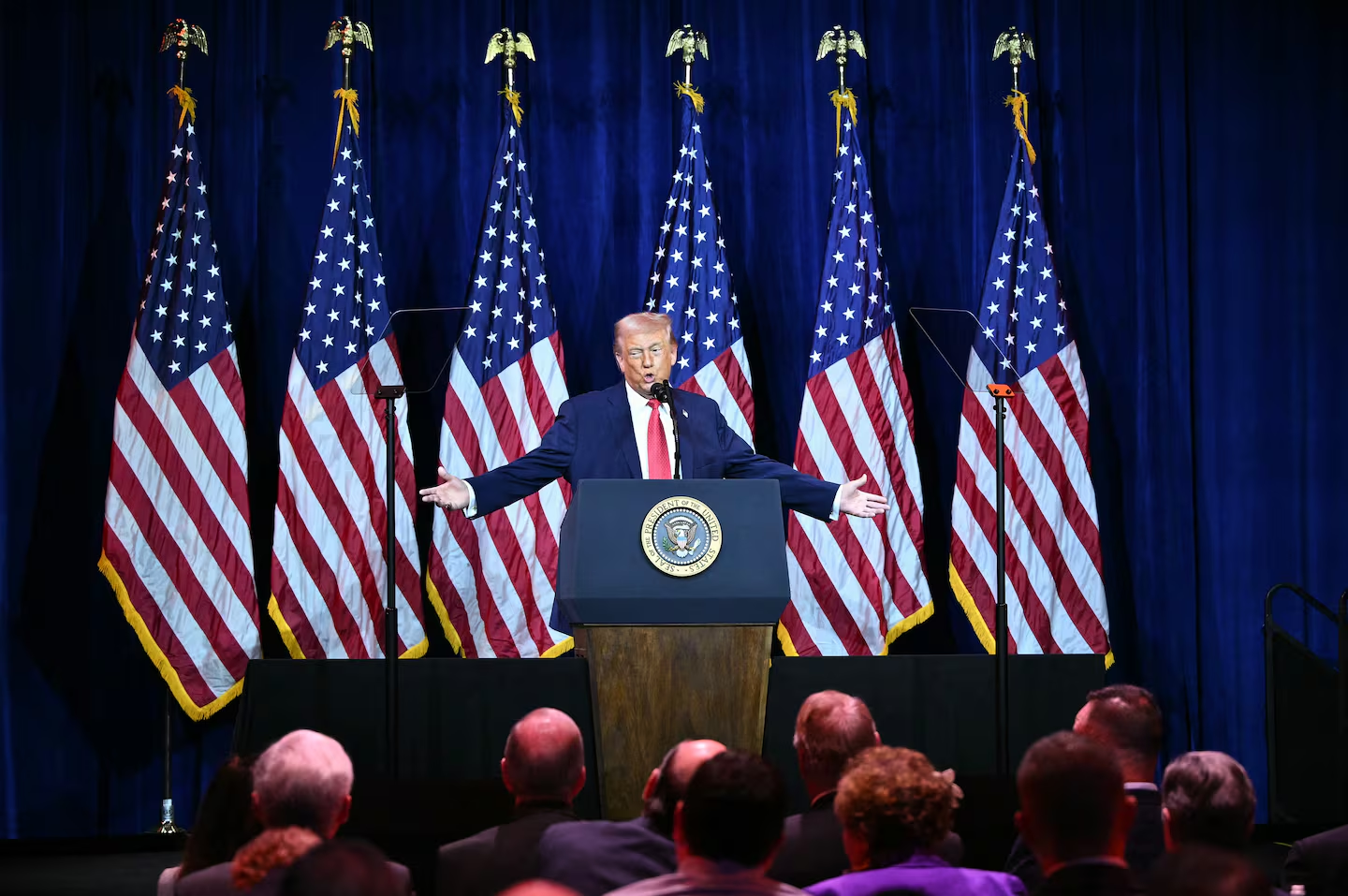
At an annual retreat for House Republicans held at the Kennedy Center, President Trump addressed a crowded room of lawmakers and commentators ahead of the 2026 midterm elections. During his remarks, he raised the notion of canceling future elections — a suggestion he immediately claimed was rhetorical, saying it was meant to mock media coverage rather than propose an actual policy.
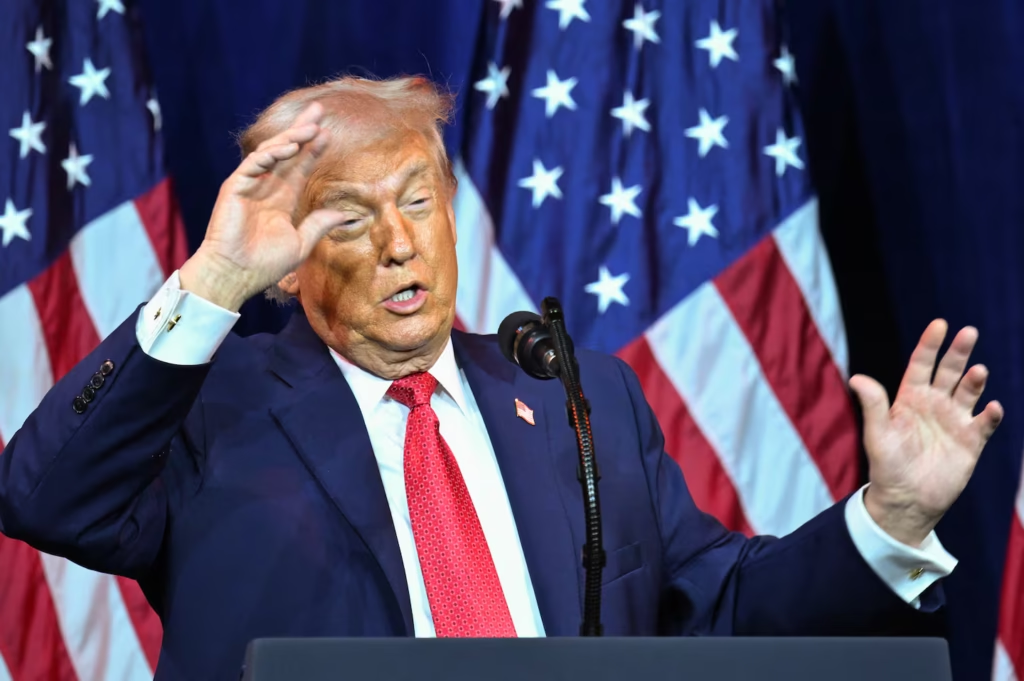
Trump framed his comment as a jab at critics who label him a “dictator,” claiming that canceling elections would reinforce their narrative. His exact words included self-aware satire — saying “I won’t say cancel the election… because they will call me a dictator,” before complaining about what he perceives as unfair media portrayal and political opposition.
However, despite the attempt at humor, these remarks were widely interpreted as deeply troubling, given the context of current political volatility and ongoing debates over election laws, voter access, and the legitimacy of democratic processes. Critics argue that even symbolic language referencing the cancellation of elections weakens confidence in democratic protections and could embolden anti-democratic sentiments.
Constitutional Reality: Can the President Cancel Elections?
Despite Trump’s comments, the U.S. Constitution and federal law make it clear that a president cannot unilaterally cancel elections. The power to conduct and schedule elections resides with individual states, under federal oversight, and requires legislative action by Congress — not executive fiat.
Election officials and constitutional experts emphasize that canceling an election would violate multiple provisions of the U.S. Constitution, including those related to representation, voting rights, and separation of powers. Even in times of national emergency or war, there is no lawful mechanism for postponing or eliminating regularly scheduled elections. Attempts to do so historically have been rejected by courts and lawmakers.
Legal scholars also point out that the president’s comments — even as satire — contribute to confusion about electoral norms and could erode public trust in democratic institutions. The idea of canceling elections, whether satirical or serious, is broadly outside the scope of presidential authority.
Political Reactions and Bipartisan Concern
Reactions from leaders across the political spectrum were swift and sharply divided.
Republican Voices
Some Republican lawmakers defended Trump’s remarks as light-hearted commentary reflecting frustration over political competition and media coverage. They portrayed his remarks as symbolic — aimed at energizing the GOP base about the importance of upcoming midterms, rather than signaling a real policy shift.
At the same time, other Republicans tried to steer the focus away from the joke — emphasizing Trump’s commitment to secure elections and criticizing Democratic efforts to challenge or investigate his administration.
Democratic and Independent Responders
Democratic leaders, civil rights groups, and election integrity advocates expressed alarm. They called the remarks dangerous rhetoric that undermines trust in the democratic process. Many pointed to Trump’s history of questioning election legitimacy — including the 2020 election — as part of a broader pattern that could chill confidence in future electoral outcomes.
The anniversary of the January 6 Capitol attack — a violent attempt to overturn the last presidential election — intensified the reaction. Critics argued that even joking about canceling elections on this date shows poor judgment and a disregard for democratic traditions.
Why This Matters: Midterms and Democratic Integrity
Midterm elections, which occur halfway through a president’s term, are a foundational pillar of U.S. democracy. They determine control of Congress and shape legislative priorities on issues including healthcare, national security, immigration, and economic policy.
In the current political climate, the 2026 midterms are especially consequential. With razor-thin majorities in both the House and Senate, the balance of power hinges on voter turnout and party mobilization. Trump’s legacy and policy agenda — from economic reforms to foreign policy decisions — are essentially on the line.
Additionally, both parties have increasingly focused on election administration strategies — such as voter ID laws, mail-in voting rules, redistricting battles, and legal challenges — all of which have become flashpoints in broader cultural and political divides.
In this larger framework, any suggestion about suspending or disrupting elections — even metaphorically — injects more uncertainty into an already charged electoral environment.
Misinterpretations and Online Discourse
Across social media platforms and political forums, Trump’s comments quickly became a polarizing talking point. On Reddit, commentators debated the legality and intent behind the president’s remark, with many claiming such actions are impossible and others decrying the rhetoric as alarming.
Some grassroots movements and activist groups used the moment to organize discussions on protecting voting rights and strengthening democratic norms. Others warned that misinterpretations of the president’s remarks could sow deeper distrust between voters and institutions.
Online observers also pointed out how political language that invokes extreme scenarios — even hypothetically — can shape public perception of democratic vulnerabilities. This underscores the critical role of media literacy and responsible political messaging in preserving civic trust.
Constitutional Experts Weigh In
Legal experts and constitutional scholars have emphasized several important principles:
- Presidential power has limits: The president cannot override the Constitution or federal statutes governing elections.
- States control elections: While the federal government sets broad standards, state election officials administer and certify voting outcomes.
- Judicial oversight is decisive: Any attempt to interfere with elections would almost certainly be challenged in court.
- Democracy is resilient but sensitive: Repeated rhetoric undermining electoral trust can erode confidence even without actual legal changes.
These assessments largely converge on one point: canceling elections is not just legally implausible — it’s fundamentally at odds with the constitutional framework and democratic principles of the U.S. system.
What Comes Next? The Stakes for 2026 and Beyond
As the United States approaches the 2026 midterm elections, the nation stands at a crossroads. Elections are scheduled to proceed as mandated by law, overseen by state authorities with federal guidelines ensuring fairness and accessibility. There is no credible mechanism by which the executive branch can cancel or postpone these elections.
However, the political climate remains deeply charged. Recent warnings from Trump about possible impeachment if Republicans underperform in the midterms underscore the high stakes for both major parties.
Civic engagement, transparent election monitoring, and robust public discourse will be essential in shaping voter confidence. And as social and digital media continue to influence how news spreads, ensuring accurate, credible reporting will be vital for maintaining democratic trust.
Conclusion
President Trump’s suggestion that the 2026 midterm elections could be canceled has set off one of the most consequential debates in recent American political history. While his remarks were couched in rhetorical flair, they touched on serious questions about the stability of democratic institutions, the balance of power, and how political leaders communicate in times of division.
The United States remains bound by constitutional protections that prevent any leader from unilaterally ending elections — but public trust in those systems hinges on transparency, shared norms, and responsible rhetoric from those in power. As the 2026 midterms near, Americans across the political spectrum will be watching closely — and documenting every development that affects the future of democracy.
Subscribe to trusted news sites like USnewsSphere.com for continuous updates.
nyt.